0086-15068518279 (Chinese)/001-5416026691 (English)



 EN
EN
 中文简体
中文简体Content
- 1 Why Centerless Technology Earned Its Place in High-Volume Production
- 2 How Centerless Grinding Works
- 3 Three Ways to Feed a Workpiece: Thru-Feed, Infeed, and End-Feed
- 4 The Real Advantages of Centerless Grinding Technology
- 5 What Precision Can You Expect from Centerless Grinding?
- 6 Where Centerless Technology Is Used in Production
- 7 Common Problems in Centerless Grinding and How to Avoid Them
- 8 What to Check When Selecting a Centerless Grinding Machine
- 9 Final Thoughts on Centerless Grinding Technology
Why Centerless Technology Earned Its Place in High-Volume Production
Consider a workshop that receives a standing order for 50,000 hardened steel rollers, each 6 mm in diameter and 80 mm long, with roundness and diameter tolerances that leave no room for guesswork. Parts that small are difficult to locate accurately between centers, chucking them one by one is painfully slow, and any axial push from the grinding wheel risks bending a slender workpiece before it is finished. This is the production scenario that drove the development of centerless grinding technology.
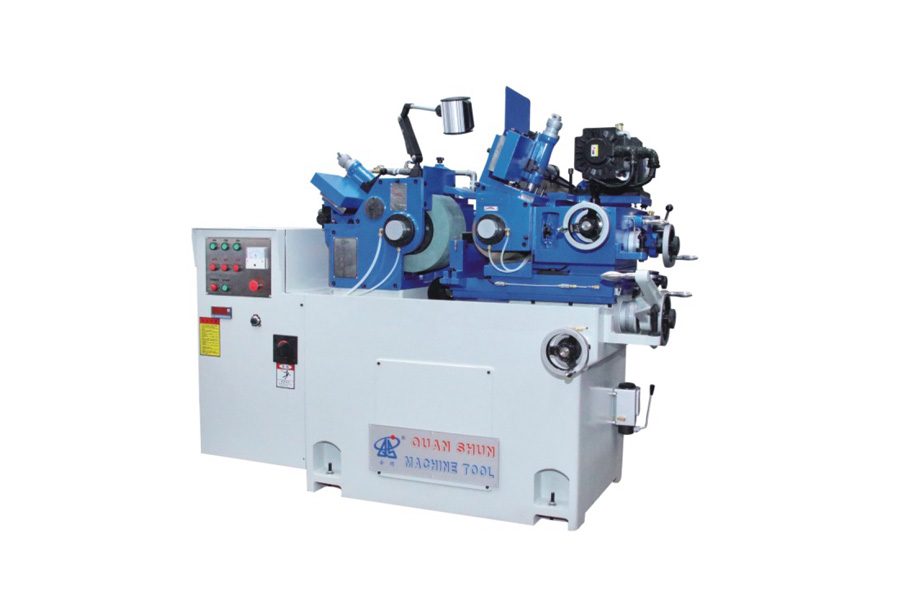
Instead of holding the workpiece between two centers, centerless grinding supports it on three contact points: the fast-rotating grinding wheel on one side, a slower regulating wheel on the opposite side, and a work rest blade underneath. No center holes, chucks, or tailstocks are needed, so the entire length of the part remains accessible to the abrasive wheel. For straight, round parts made in large quantities, this usually means shorter cycle times, more stable roundness, and far less operator handling than almost any alternative method.
How Centerless Grinding Works
The principle sounds simple, but the geometry behind it is what makes the process reliable. The grinding wheel runs at cutting speed and actually removes material. The regulating wheel, typically a rubber-bonded abrasive wheel, presses the workpiece toward the grinding wheel and controls its rotation at a constant surface speed. The work rest blade supports the part from below. Together, these three elements form the support triangle that defines the whole process.
If the equipment itself is new ground, our guide to what a centerless grinding machine is and how it is built walks through the machine layout and the function of each major unit.
The Regulating Wheel Sets Rotation and Feed
The regulating wheel is usually tilted a few degrees relative to the grinding wheel axis. At zero tilt, the workpiece only rotates in place; that is the infeed mode. As the tilt angle increases, an axial velocity is generated, pulling the workpiece through the gap between the wheels. This angle, together with the dressing feed rate applied to the regulating wheel, determines how fast a part travels through a thru-feed operation.
Work Rest Blade Height Is the Setup Variable That Decides Roundness
The blade supports the part and positions its center relative to the line connecting the two wheel centers. If the center height is wrong, the process becomes unstable and the part can develop lobing, a polygonal shape error that destroys roundness in an otherwise perfect-looking grind. A careful operator treats blade height, blade angle, and wheel dressing as the three pillars of a good centerless setup.
Three Ways to Feed a Workpiece: Thru-Feed, Infeed, and End-Feed
Because parts come in different shapes, centerless grinding is operated in three distinct modes. Choosing the wrong one is one of the most frequent mistakes in shops new to centerless technology. A part with a large flange, for example, cannot be fed through the gap; it needs infeed grinding. A plain straight pin, by contrast, would waste time in infeed mode when thru-feed could complete it in seconds.
| Feed method | How the workpiece moves | Best suited for |
|---|---|---|
| Thru-feed | Regulating wheel is angled; parts enter at one end of the wheel and exit at the other. | Straight cylindrical parts without shoulders: pins, rollers, drill blanks, bar stock. |
| Infeed (plunge) | Workpiece stays in one position while the grinding wheel advances into it. | Shouldered, stepped, tapered, or formed parts that cannot pass through the wheels. |
| End-feed | Part is pushed from the front along a support and ground over a portion of its length. | Tapered parts and short blanks that need only partial grinding. |
The Real Advantages of Centerless Grinding Technology
The reasons production managers specify centerless grinding go beyond simple speed. The process delivers a combination of productivity and consistency that is hard to match:
- High throughput per spindle. Parts are loaded and dropped without clamping, and the wheel grinds continuously rather than starting and stopping for each part.
- No axial clamping force. Because nothing pushes the part along its axis, long and brittle workpieces can be ground without bending.
- Roundness does not depend on centering accuracy. The support triangle, not the operator's alignment skill, defines the resulting geometry.
- Very small diameters are practical. Pins and rollers that are hard to grip between centers are handled easily on a blade.
- Consistent surface finish. A rigid setup and continuous support allow a uniform finish over the full part length.
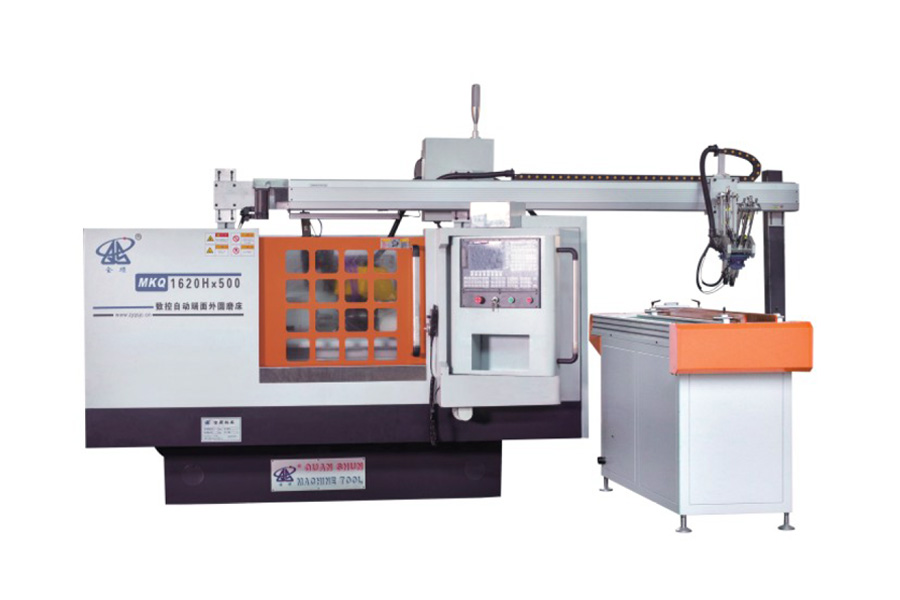
These advantages make centerless technology an attractive fit inside automatic production cells. When the process is paired with gantry loading, a single machine can run a batch with minimal operator attention; our automatic loading and unloading solutions keep the grinding gap supplied around the clock and are a common choice for high-volume lines.
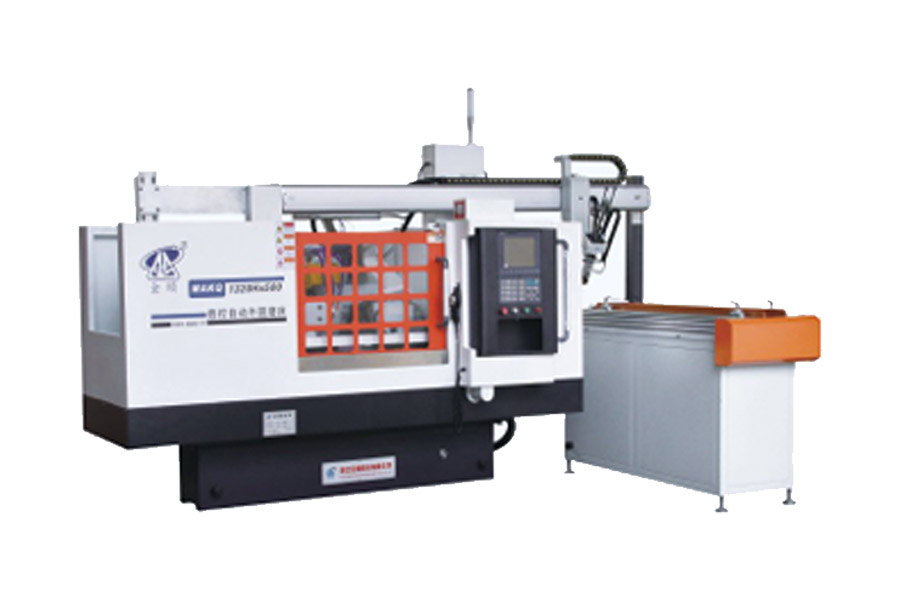 Automated Grinding Machine, Automatic Loading And Unloading Grinding, Custom AutZhejiang Quanshun Machine Tool is a custom automated grinding machine company, supplying heavy-duty grinders with automatic loading and u...View Product →
What Precision Can You Expect from Centerless Grinding?
Part accuracy in centerless grinding is defined mainly by the machine's structural rigidity, the regulating wheel dressing, and the stability of the blade support. Under consistent conditions, modern centerless machines hold diameter tolerances in the low-micrometer range with excellent repeatability from part to part. A well-established machine, correct wheel selection, and disciplined dressing are the prerequisites. For production-line reference, we keep a detailed note on how accurate centerless grinding can be, including the tolerances a stable setup of this type can deliver.
Finish quality is separate from size tolerance. Grinding wheel grit, dressing feed rate, coolant filtration, and vibration all act together to determine surface roughness values. Shops that want mirror finishes on bearing rollers or valve pins usually spend as much time optimizing the coolant system as they do selecting the wheel.
Where Centerless Technology Is Used in Production
Automotive plants use centerless grinding for valve pins, fuel injector needles, suspension pins, and transmission rollers. Aerospace subcontractors rely on it for landing gear pins and small turbine shaft components, where repeatable roundness on slender parts matters as much as surface quality. Medical device manufacturers grind tiny pins and instrument shafts that would be nearly impossible to hold between centers. In general industrial production, bearing rollers, hydraulic spools, linear guide shafts, dowel pins, and fasteners are typical jobs.
The common thread is the part profile: a round shape, often with a tight tolerance, usually produced in enough volume to justify a dedicated machine. For low-mix, high-volume work, centerless grinding remains one of the most cost-efficient processes available.
Common Problems in Centerless Grinding and How to Avoid Them
Centerless grinding looks forgiving, but a few errors account for most quality complaints.
Lobing and Chatter
Lobbing, a polygonal error, usually comes from an incorrect workpiece center height or an unsuitable blade angle. Chatter shows up as vibration marks and is frequently traced to wheel imbalance, worn spindle bearings, or insufficient machine mass. Check the machine for rigidity first, then re-examine the setup geometry.
Feed and Dressing Inconsistencies
Thru-feed speed changes come from an incorrectly dressed regulating wheel or a worn feed angle. The regulating wheel needs to be dressed at the same angle used for grinding, otherwise the contact geometry changes mid-run. Infeed operations fail when the grinding wheel is dressed too coarsely or the wheel profile no longer matches the part.
Coolant and Thermal Control
Because the contact zone is relatively large, heat must be removed continuously. A poorly aimed nozzle or clogged filter creates local overheating that alters the part size and leaves burn marks. The coolant nozzle design and the circulation path deserve as much attention during machine setup as the grinding wheel itself. Our technical blog also collects common problems in centerless grinding with the adjustment sequence for each one.
What to Check When Selecting a Centerless Grinding Machine
Choosing a centerless machine begins with the workpiece envelope and the daily production target. We have been building grinding machines at our Zhejiang facility since 2003 and export them to more than 45 countries, so the selection advice below comes directly from production-floor experience. Work through the machine specification with these checks in mind:
- Workpiece envelope. Does the center height range and wheel width accept your diameters, your longest thru-feed shafts, and your infeed lengths?
- Grinding wheel width and spindle power. A wider wheel improves throughput but demands a more rigid spindle and more careful dressing.
- Machine structural mass. A heavier casting dampens vibration and holds geometry across long runs.
- Regulating wheel drive quality. The regulating wheel controls rotation and feed, so its drive, bearing, and dressing system determine most of the process stability.
- Coolant system capability. Flow rate, nozzle design, and filtration must handle the heat of continuous contact grinding.
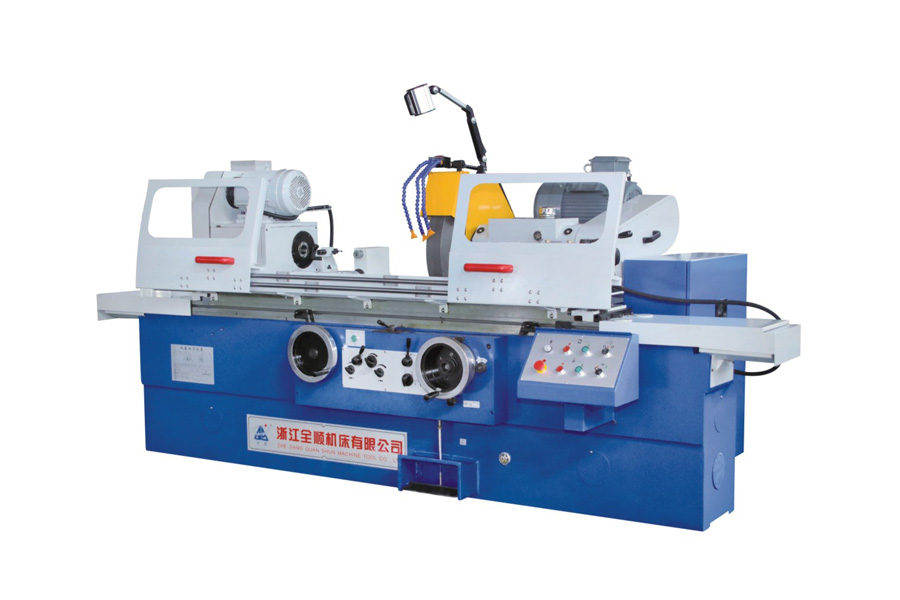
For most shops, a dedicated conventional centerless machine is the right first step. It has fewer axes to program, simpler controls, and lower maintenance cost than a multi-axis CNC grinder, while still delivering the productivity that made centerless technology so widely used. The centerless grinding machine in our conventional lineup offers a practical balance of rigidity, grinding wheel width, and regulating wheel control for continuous production.
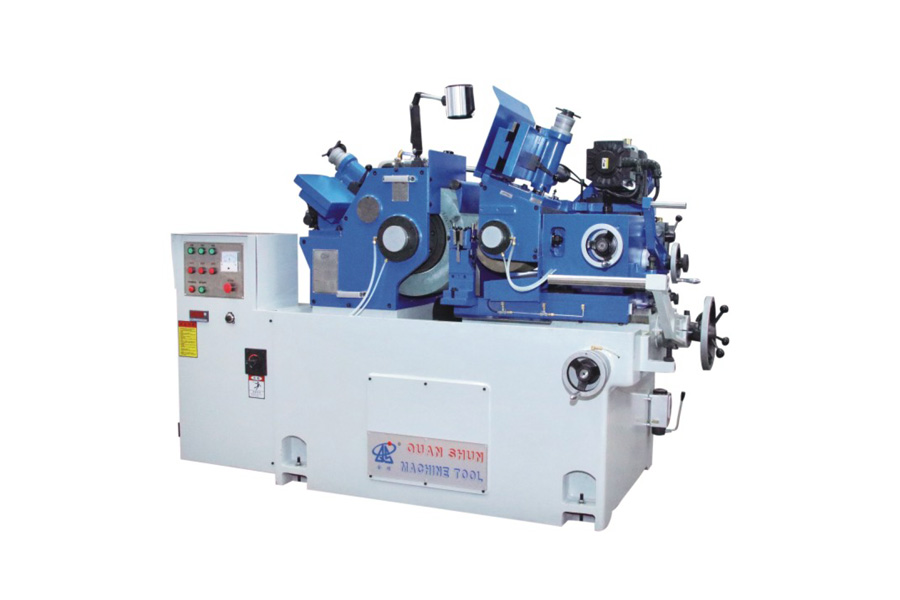 Wholesale Centerless Grinding Machine Manufactures, FactoryAs a China Centerless Grinding Machine manufacturer and Centerless Grinding Machine factory, Zhejiang Quanshun Machine Tool Co., Ltd spec...View Product →
Shops with highly specific workpieces, such as very long broaches, large-diameter components, or screw sleeves, may find that a standard centerless machine does not fit the part shape. In those cases, discussing a custom grinding machine with the manufacturer is a more direct route than adapting a standard model.
Final Thoughts on Centerless Grinding Technology
Centerless grinding technology is mature, but it remains one of the most effective processes for round parts at volume. The method's value appears when three conditions are met: the part is essentially round, the volume justifies a dedicated setup, and the machine is rigid enough to hold the geometry all day. When a supplier offers both conventional and CNC grinding platforms, and is willing to support custom workpieces, the decision becomes much easier.