0086-15068518279 (Chinese)/001-5416026691 (English)



 EN
EN
 中文简体
中文简体Content
- 1 What CNC Installation Actually Covers
- 2 Floor, Foundation, and Leveling: Where Accuracy Is Decided
- 3 Power Supply, Grounding, and Signal Quality
- 4 Air, Coolant, and Hydraulic Connections
- 5 Geometry Checks Before the First Workpiece
- 6 Acceptance Grinding and Sign-Off
- 7 Automation, Training, and the First Month
- 8 Installation Mistakes That Surface Later
A CNC grinding machine arrives crated: several tonnes of cast iron, a control cabinet with its own documentation set, and a production schedule that already assumes the machine will be grinding within two weeks. How that machine is installed decides far more about its long-term accuracy than any single line on the specification sheet.
Here is the conclusion first: CNC installation on a precision grinder is a measurement project, not a moving project. Foundation and leveling come before power, power comes before geometry, and geometry comes before the first trial part. When those stages happen in that order and the readings are written down, a machine that meets its roundness and surface finish targets on acceptance day usually still meets them years later. When the order is scrambled, the symptoms — taper, chatter, size drift across a shift — look like control problems but are almost always installation problems.
What follows is the practical sequence for installing a CNC cylindrical grinder, an end-face grinder, or a custom grinding machine, together with the tolerances and records that matter at each stage.
What CNC Installation Actually Covers
Suppliers and buyers often mean different things by the same word. A complete installation for a CNC grinding machine normally spans six workstreams:
- Site preparation: floor load capacity, machine footprint, maintenance clearance, crane or forklift access, and lighting.
- Foundation and leveling: anchor plan, grout, vibration isolation, and machine level in two perpendicular directions.
- Power and grounding: dedicated feed, voltage and phase verification, earth resistance, and cable sizing.
- Utilities: shop air, coolant supply and return, hydraulic oil, and chip removal.
- Mechanical and control setup: spindle runout, tailstock alignment, wheel balancing, parameter loading, and offset entry.
- Acceptance grinding: sample parts measured for size, roundness, taper, and surface roughness, with results recorded.
The table below shows the same sequence as a checklist, including the evidence worth keeping from each stage.
| Stage | What Gets Verified | Evidence to Keep |
|---|---|---|
| Site and foundation | Floor load, anchor layout, isolation | Signed foundation drawing |
| Leveling | Level in two axes, usually 0.02 mm/m | Leveling record, before and after grout cure |
| Power | Voltage, phase rotation, earth resistance | Load readings and insulation test results |
| Geometry | Spindle runout, tailstock alignment, backlash | Dial indicator and test bar records |
| Control setup | Parameters, offsets, wheel dressing cycle | Parameter backup file |
| Trial grinding | Size, roundness, taper, surface roughness | Sample part measurement report |
Before the crate is opened, agree in writing on who supplies the foundation drawing, who pours and cures the grout, who brings the test bar and precision level, and which acceptance standard applies. On grinding machines, ISO 230-1 or its national equivalent, such as GB/T 17421.1, is a common reference for geometric accuracy testing.
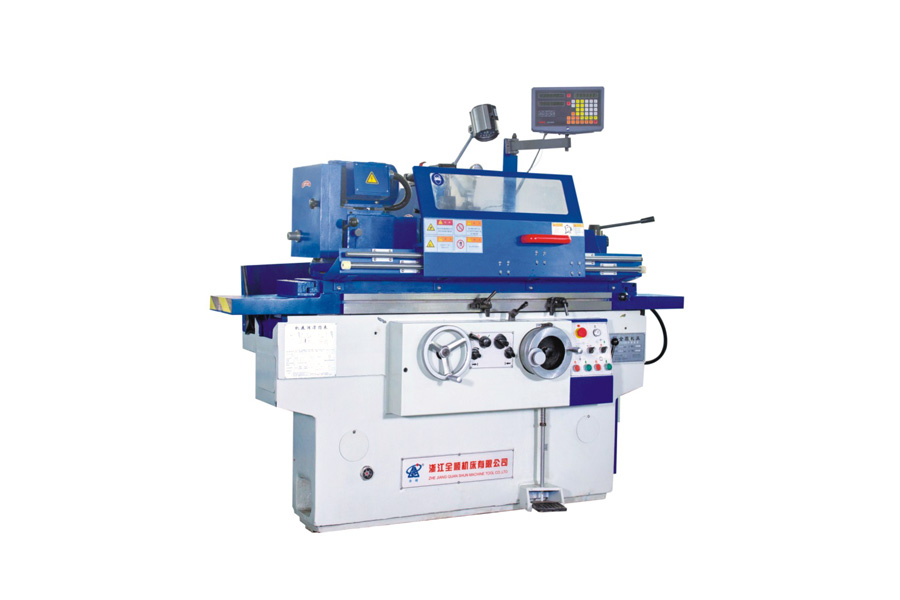
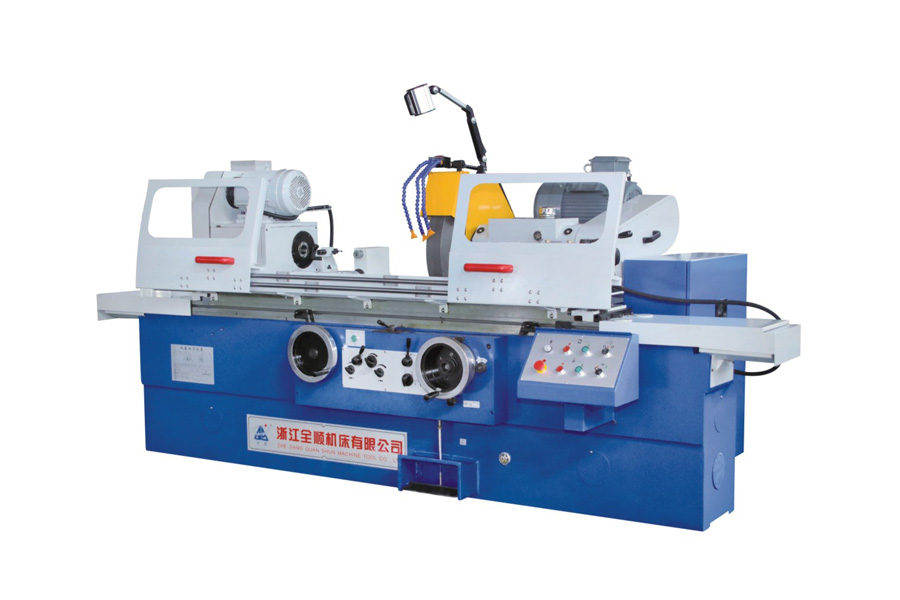
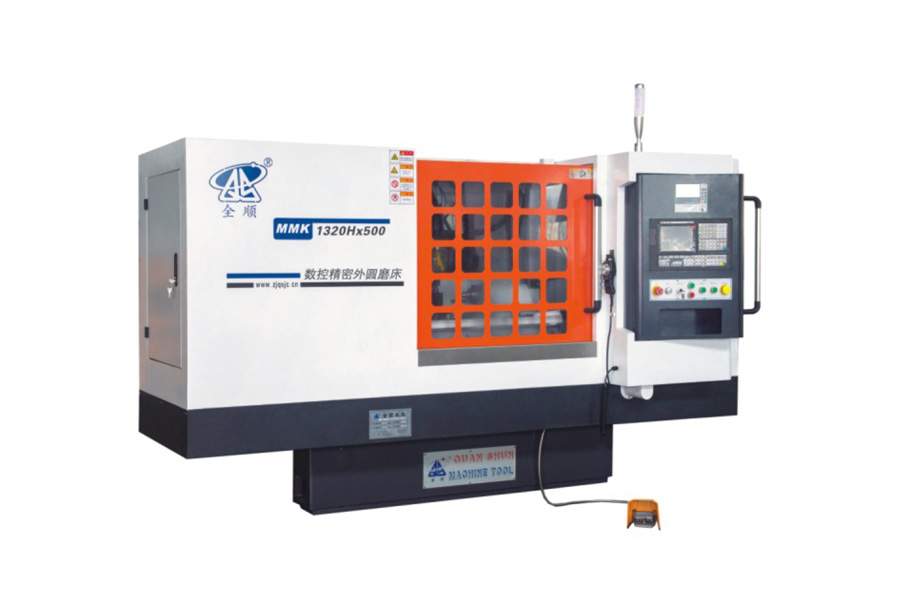
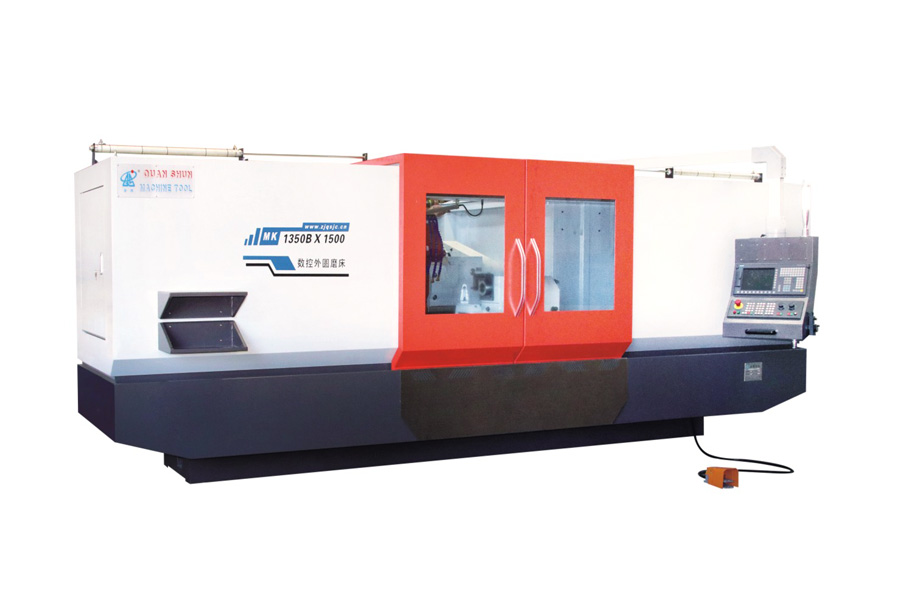
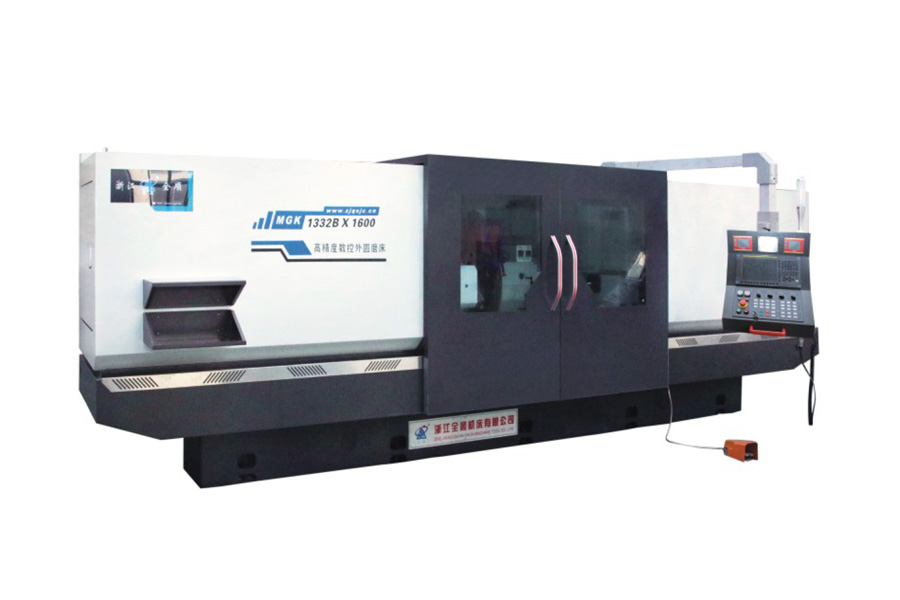
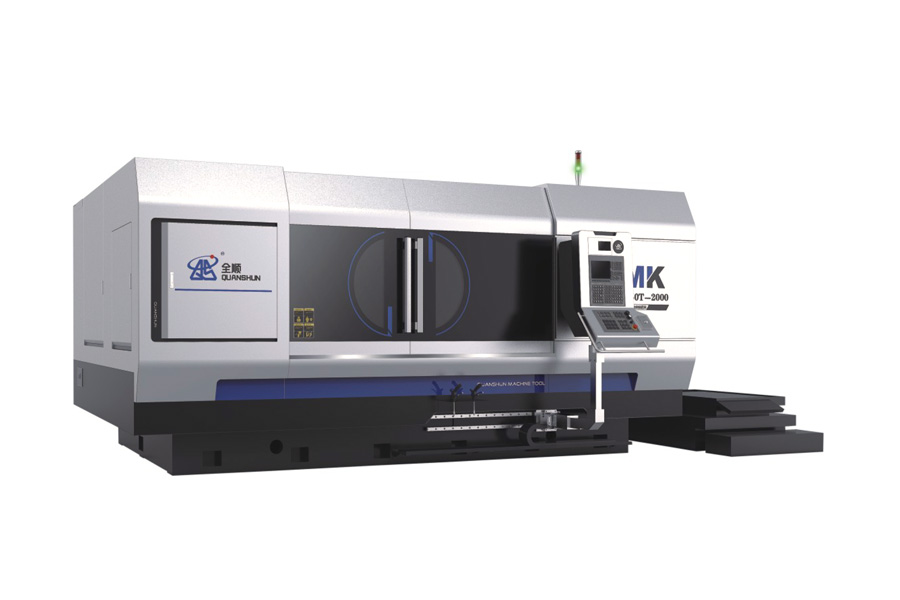
 CNC Cylindrical Grinding Machine MK/MAK SeriesOur High-Precision CNC Cylindrical Grinding Machine is engineered for manufacturing environments requiring extreme dimensional accuracy and flawless surface finishes. ...View Product →
Floor, Foundation, and Leveling: Where Accuracy Is Decided
A precision grinder is more sensitive to its base than a machining center of similar weight. The reason is straightforward: grinding removes very little material at very high precision, so any movement of the bed transfers directly into the workpiece.
Foundation options
Two approaches are common. An isolated concrete block, separated from the surrounding slab by a joint, gives the best vibration isolation and is the usual choice for high-precision and profile grinding work. A heavy reinforced slab is acceptable for smaller machines and lighter duty. As a rule of thumb, a dedicated grinder foundation is poured at three to five times the machine mass. Concrete needs adequate curing time — commonly several days to weeks depending on mix and thickness — and grout under the machine base typically needs 24 to 72 hours before final leveling is confirmed.
Leveling procedure
Level the machine to about 0.02 mm per meter in both axes, using a precision level placed on the table or a dedicated leveling pad. Then re-check: after the grout has cured, after the anchor bolts have been torqued in sequence, and again after the first week of running. A single leveling pass on the day of unloading is not a leveling record; it is a starting point.
Vibration and temperature
Position the machine away from presses, planers, and large air compressors. Direct sunlight and nearby space heaters also matter, because a temperature difference across the bed tilts the machine slightly and shows up as taper on long workpieces. Isolation pads or a trenched foundation solve most of this, provided they are planned before the machine is placed.
Power Supply, Grounding, and Signal Quality
Electrical work on a CNC grinder is where shortcuts are easiest to take and most expensive to fix. The essentials:
- Measure voltage at full load with a power quality analyzer during a spindle start, not with a handheld meter on an idle machine. A supply that looks stable at rest can sag during acceleration.
- Verify phase rotation before connecting the spindle motor, coolant pump, and hydraulic pump. A reversed pump can be destroyed in seconds.
- Run a separate protective earth conductor. Earth resistance should meet local code, commonly 4 ohms or less, and the machine ground should not be daisy-chained with welding equipment.
- Size cables so that voltage drop stays under roughly 3 percent at full load. Undersized cable often appears first as drive alarms during acceleration.
Why the control cabinet is not a desktop computer
CNC controllers and servo drives are sensitive to switching spikes. If the plant runs large welders, induction furnaces, or frequent heavy switching, an isolation transformer or line reactor costs far less than a failed drive. A small UPS is worth having for the controller memory and program protection during short interruptions, but it should never be expected to carry the spindle.
Air, Coolant, and Hydraulic Connections
Utilities are usually connected last and checked least. Three items deserve attention:
- Shop air: typically 0.5 to 0.6 MPa, filtered to around 5 microns, with a dryer in the line. Moisture reaching air-oil valves or linear scales is a common source of intermittent alarms.
- Coolant: tank volume matched to the grinding cycle, correct emulsion concentration, adequate filtration, and a return path that does not flood the slideways.
- Hydraulics: the specified oil grade, oil temperature kept below roughly 55 degrees Celsius, and filter condition recorded at commissioning.
Run a 24-hour leak and pressure-hold check before any grinding begins. A small hydraulic weep found at this stage costs minutes; found three months into production, it costs a shift.
Geometry Checks Before the First Workpiece
With the machine level and thermally settled, verify the geometry. On a cylindrical grinder, the checks that matter most are:
- Wheel spindle runout and axial play.
- Wheel balancing and a proper first dressing to open the wheel face.
- Workhead and tailstock alignment, checked with a test bar and dial indicator.
- Table straightness and the taper adjustment mechanism.
- Backlash and compensation values on each axis.
Write every reading into the installation log. A baseline taken on commissioning day is the fastest reference available when a size problem appears two years later.
Acceptance Grinding and Sign-Off
Trial grinding is the only proof that the previous stages worked. A sensible acceptance run starts with a few rough-ground parts to bring the machine to working temperature, then moves to measured samples. Diameter, roundness, cylindricity, taper, and surface roughness should all be recorded against the drawing tolerance.
Repeatability deserves its own test: grind 20 to 30 consecutive parts under the same conditions and calculate the spread. A process capability index of 1.33 or better is a reasonable target for a stable grinding process. A thermal drift check — one part every 30 minutes for two hours — shows whether the machine holds size as the spindle and hydraulic oil warm up. The method for evaluating precision and repeatability is worth agreeing on before the machine arrives, not after.
Sign-off should include the leveling record, the geometry readings, the parameter backup, and the sample part report. That file is the machine's baseline.
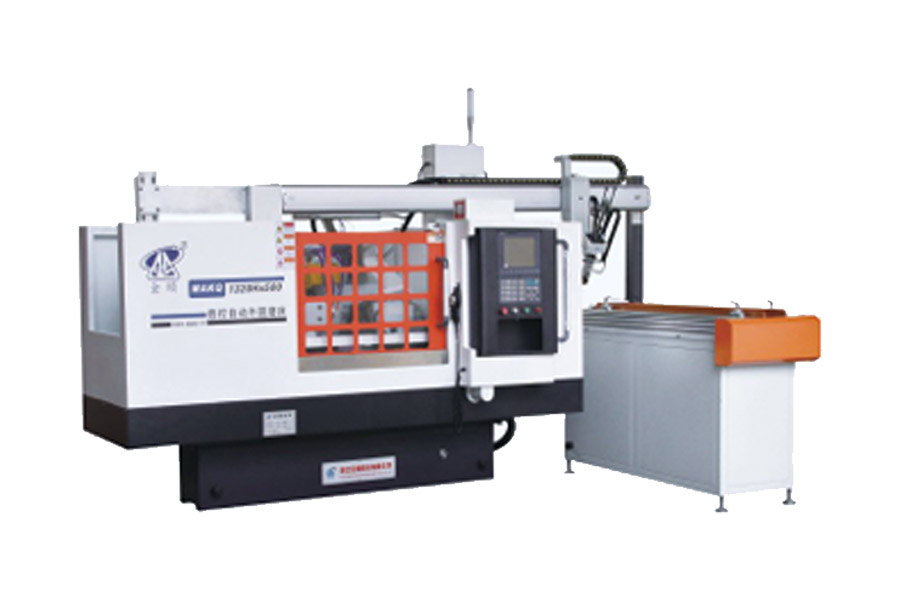
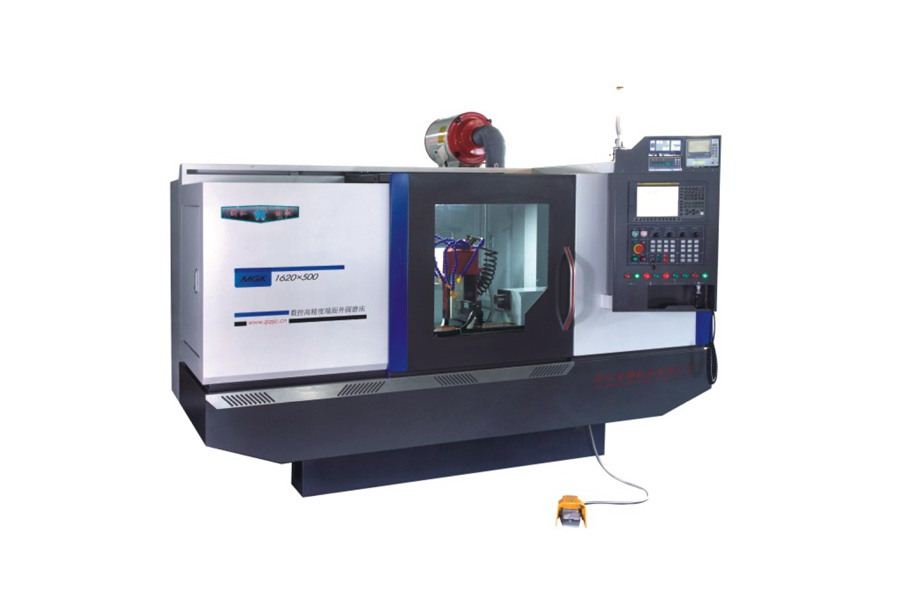
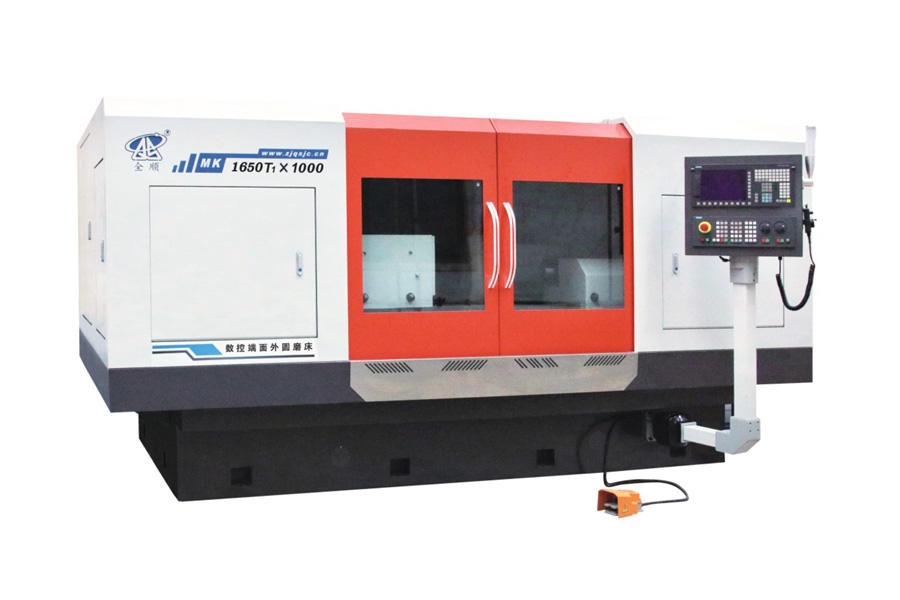
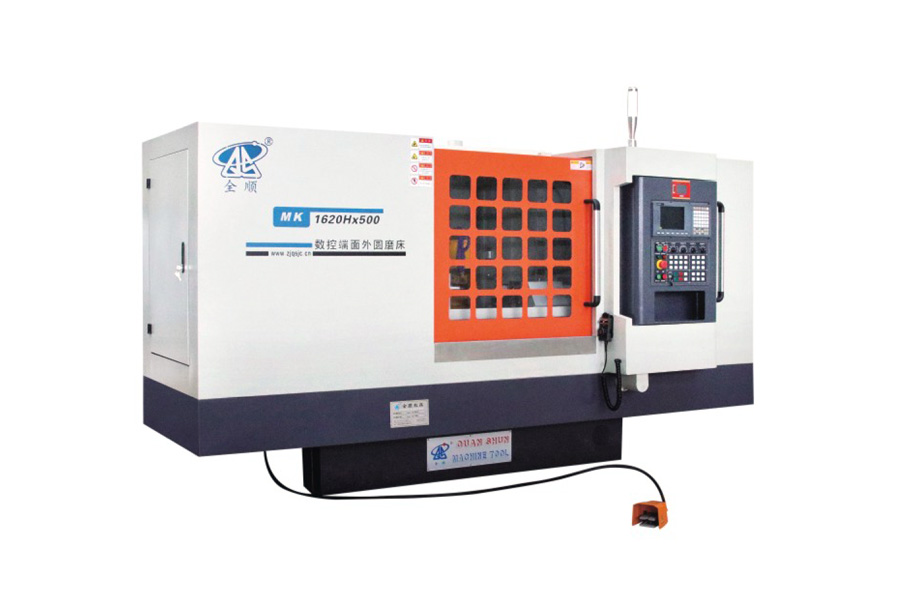
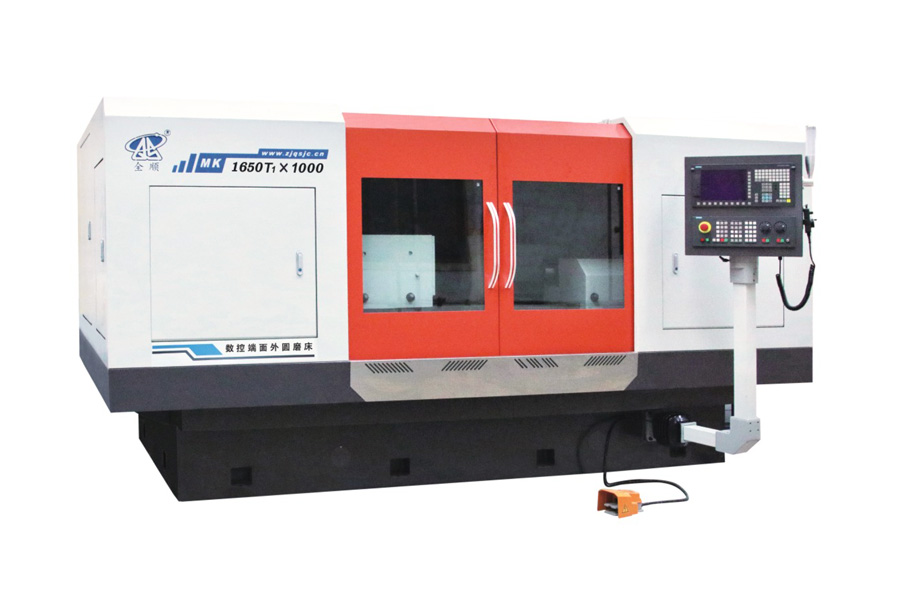
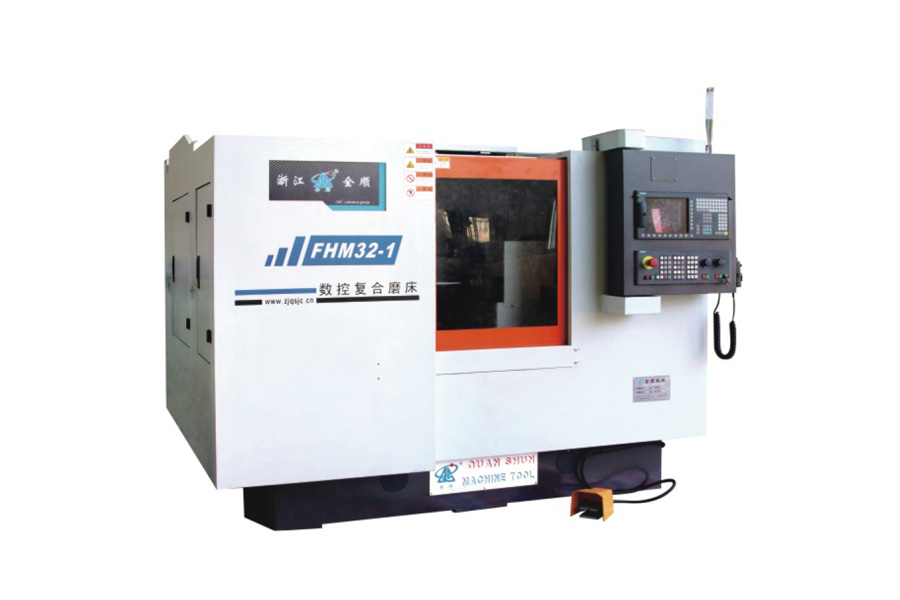
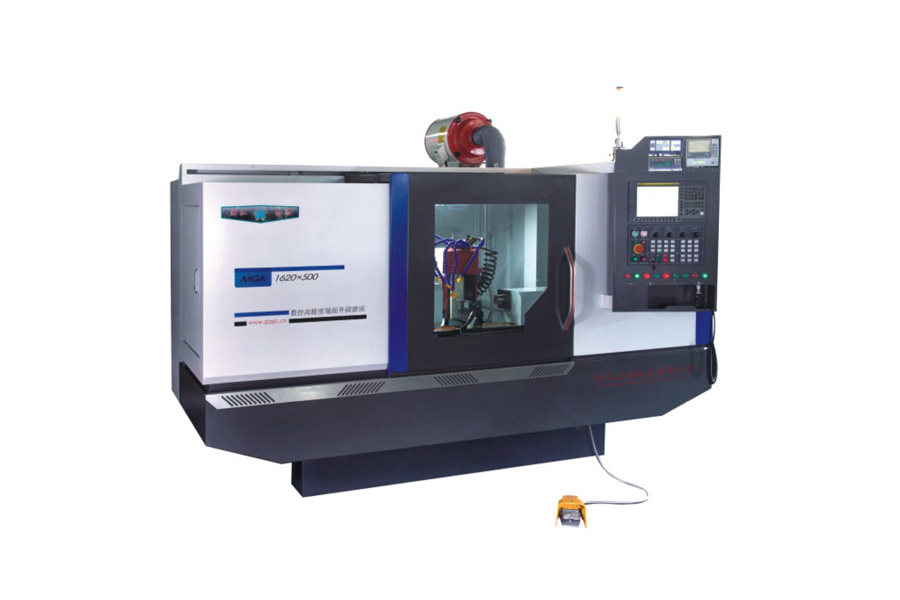 High Precision CNC Face And Cylindrical Grinding MachineThe High Precision CNC Face and Cylindrical Grinding Machine utilizes a rigid 30-degree or 45-degree angular wheelhead to grind outer diameters (OD) and perpendicular ...View Product →
Automation, Training, and the First Month
If the machine is fitted with automatic loading and unloading, commissioning continues past the first good part. Gripper or robot teaching, interlock verification, cycle time confirmation, and chip management all need to be tested under production conditions rather than in a single demonstration cycle. For workpieces outside standard geometry, a custom grinding machine will also have fixture-specific settings that belong in the log.
Training is often compressed into a single day. Operators need the dressing cycle, offset adjustment, and alarm response; maintenance staff need lubrication points, filter locations, and the leveling re-check schedule. Splitting training into two short sessions, one at commissioning and one after a month of running, tends to stick better than one long session.
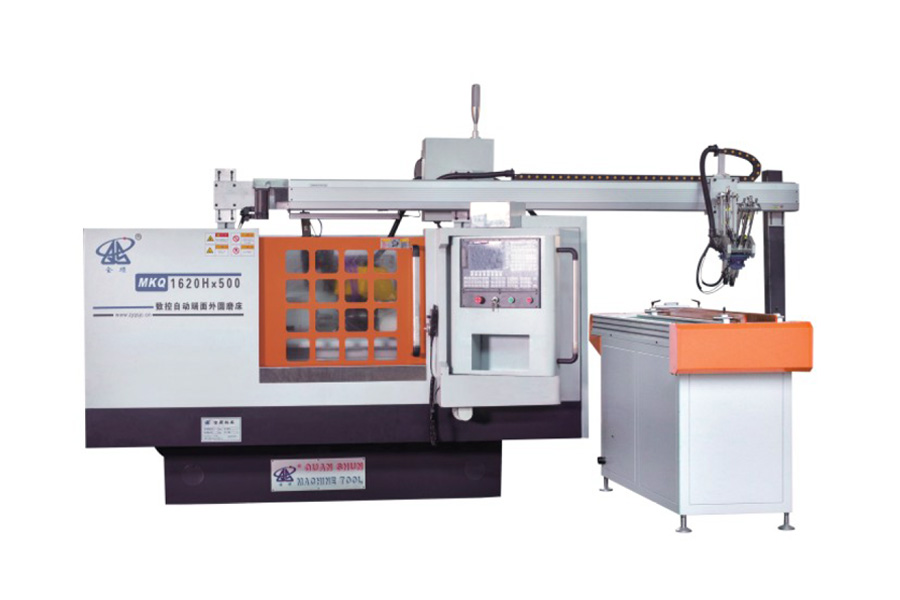
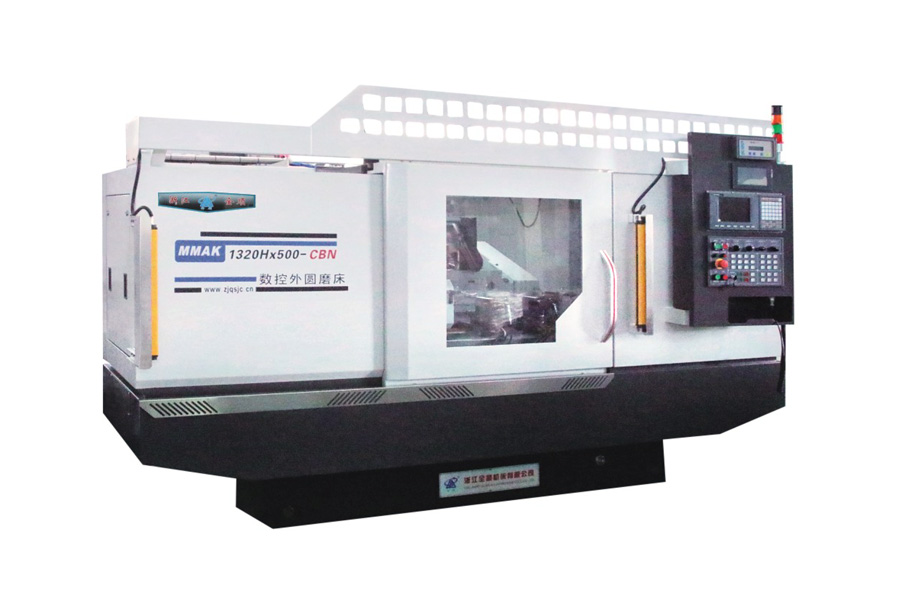
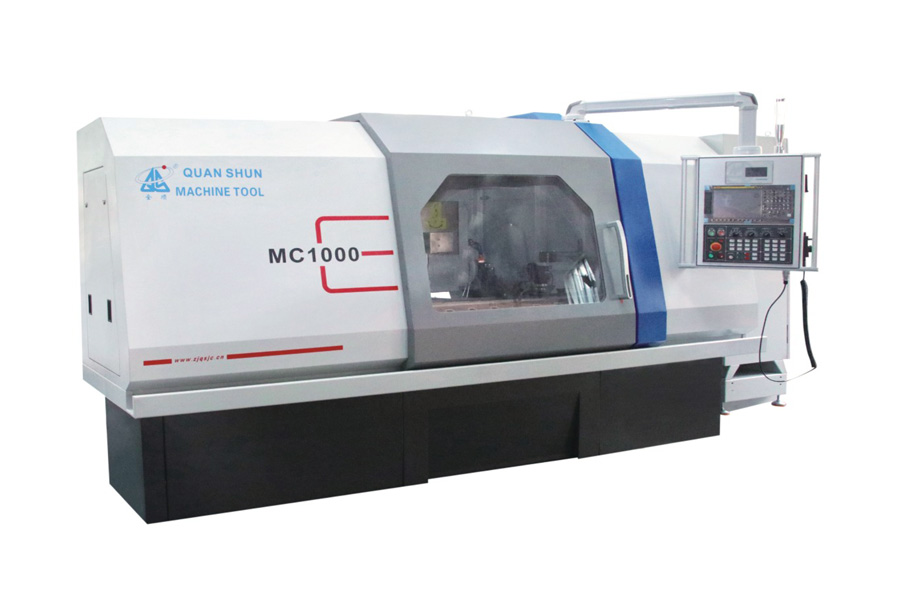
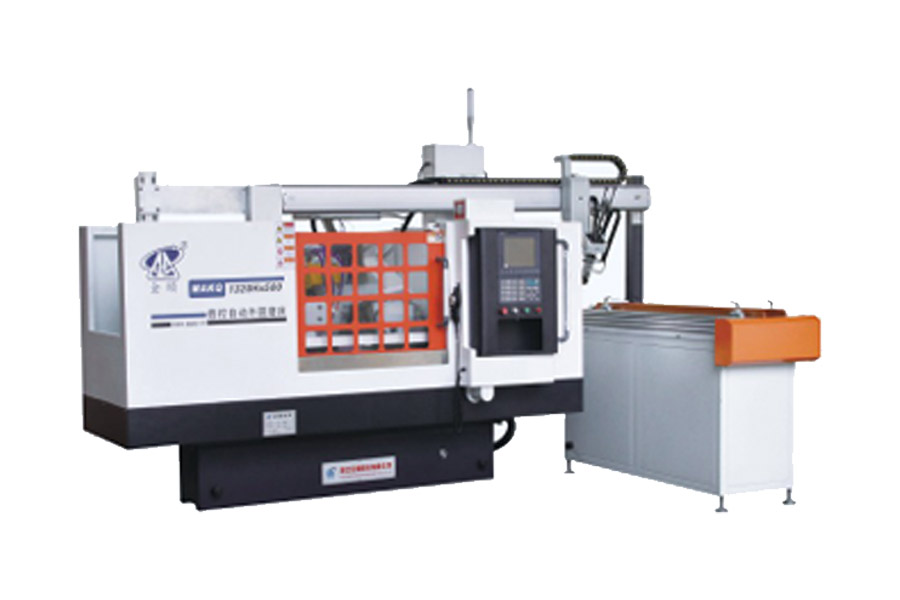 Automatic CNC Cylindrical Grinding MachineKey Features & Benefits High-Efficiency Automation: Engineered for mass production, this automatic loading and unloading CNC cylindrical grinder allows one operator to...View Product →
Installation Mistakes That Surface Later
Most installation failures are not dramatic. They are small omissions that reveal themselves weeks or months into production:
- Leveling once and never re-checking after the grout cured or the anchor bolts settled.
- Sharing a power feed with welders or other heavy intermittent loads.
- Connecting the coolant and hydraulic pumps without confirming rotation direction.
- Skipping a documented trial grinding run and accepting a single demonstration part as proof.
- Leaving no parameter backup, so a controller fault resets the machine to factory values.
Plan on two to four weeks from unloading to sign-off for a precision grinder, and treat the foundation as the longest lead item. Ask the machine supplier for the foundation drawing, the utility requirements, the leveling tolerance, and the acceptance protocol before delivery, so the civil, electrical, and rigging work can be scheduled in parallel rather than in sequence. The cost of that planning is measured in days. The cost of skipping it is measured in scrapped parts, unexplained size drift, and years of arguments about whether the machine or the installation is at fault.