0086-15068518279 (Chinese)/001-5416026691 (English)



 EN
EN
 中文简体
中文简体Content
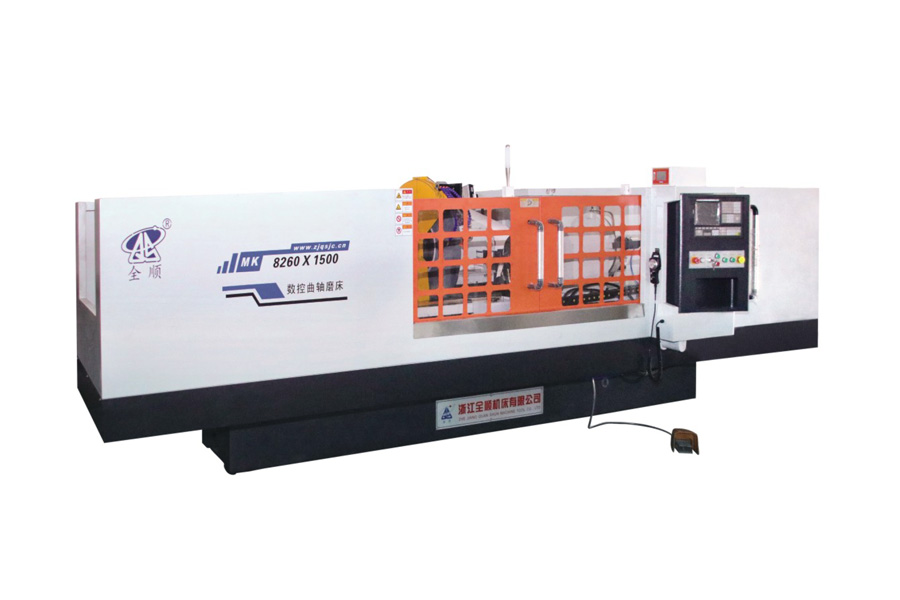
During long-term, high-load machining operations, common faults in crankshaft grinding machines mainly include grinding accuracy deviations (such as out-of-tolerance roundness and cylindricity), workpiece surface chatter marks or burns, hydraulic transmission system crawling or unstable pressure, and abnormalities in the grinding wheel spindle. As a key piece of equipment for the precision machining of core engine components, the operating status of the crankshaft grinding machine directly determines the quality and lifespan of the crankshaft.
I. Workpiece Surface Quality Defects: Chatter Marks and Burns
In the machining process of crankshaft grinding machines, the most intuitive faults are often reflected on the workpiece surface. This not only affects the product's appearance but also affects the fatigue strength of the crankshaft.
1. Surface Chatter Marks (Straight or Spiral)
Chatter marks are one of the most troublesome problems in grinding, usually caused by system vibration.
- Grinding wheel imbalance: The grinding wheel's static balance is not calibrated, or the center of gravity shifts after the grinding wheel absorbs oil.
- Insufficient rigidity: Improper adjustment of the center rest support of the crankshaft grinding machine, or poor rigidity due to the slender workpiece.
- Transmission chain problems: The motor V-belt is too tight or too loose, causing resonance.
- Poor grinding wheel dressing: The diamond dresser is worn or the dressing speed is uneven.
2. Workpiece Surface Burns
Burns usually appear as yellow or black oxidation spots on the workpiece surface, indicating that the temperature in the grinding zone is too high.
- Coolant problems: Insufficient flow rate, incorrect nozzle position, or deteriorated or ineffective coolant.
- Improper grinding parameters: Excessive feed rate or unreasonable matching of crankshaft grinding machine speed.
- Incorrect grinding wheel selection: The grinding wheel hardness is too high or the structure is too dense, resulting in poor self-sharpening and severe frictional heat generation.
II. Geometric Accuracy Deviations: Roundness and Taper Problems
The core value of a crankshaft grinding machine lies in its "precision." Once accuracy is lost, the equipment becomes meaningless.
1. Taper on the Journal
- Centerline deviation: The line connecting the centers of the headstock and tailstock is not parallel to the direction of movement of the worktable.
- Thermal deformation: Grinding heat causes thermal deformation of the machine bed or workpiece.
- Center Hole Problem: Poor contact or foreign objects in the center holes at both ends of the crankshaft.
2. Journal Roundness Exceeds Tolerance (resulting in polygonal or elliptical shape)
- Spindle Clearance: Wear in the spindle bearings of the crankshaft grinding machine's grinding wheel head or headstock, resulting in excessive clearance.
- Center Point Wear: Severe wear of the headstock and tailstock center points, leading to reduced rotational accuracy.
- Workpiece Clamping: Uneven clamping force of the chuck, causing deformation of the crankshaft.
III. Mechanical and Hydraulic System Failures
In addition to processing effects, abnormal mechanical movements of the crankshaft grinding machine itself are also common failure points.
1. Hydraulic System "Crawling"
When the workbench moves at a low speed, if there is intermittent movement or jumping, it is called "crawling."
- Air Entrainment: Air is mixed into the hydraulic cylinder or pipeline, leading to unstable pressure transmission.
- Poor Guide Rail Lubrication: Lack of oil or difficulty in forming an oil film on the guide rails, resulting in excessive friction.
- Overly Tight Seals: Leading to movement resistance exceeding the driving force.
2. Grinding Wheel Head Rapid Advance and Retraction Failure
- Electrical Fault: Burnout of the control solenoid valve coil or poor contact of the relay.
- Hydraulic Jamming: The valve core is jammed by impurities in the hydraulic fluid, preventing the crankshaft grinding machine from performing advance and retraction movements.
IV. How to Prevent Crankshaft Grinding Machine Failures?
To reduce downtime and extend the service life of the crankshaft grinding machine, the following maintenance measures are recommended:
Expert Tip: Preventive maintenance is far less costly than post-failure repairs.
- Regular Calibration: Check the center line of the headstock and tailstock and the static balance of the grinding wheel monthly.
- Strict Control of Lubricants: Regularly replace hydraulic oil and lubricating oil to ensure they are free of impurities.
- Standardized Operation: Operators should strictly follow the operating procedures of the crankshaft grinding machine for warm-up and grinding, avoiding high-speed heavy cutting on a cold machine.
- Cooling System Maintenance: Regularly clean the water tank and magnetic separator to ensure sufficient cooling.
Through scientific fault diagnosis and daily maintenance, the processing accuracy and stability of the crankshaft grinding machine can be effectively improved, creating greater value for the enterprise.