0086-15068518279 (Chinese)/001-5416026691 (English)



 EN
 中文简体
Content
A robot loader is not a robot bolted beside a grinder. It is a matched system of part presentation, gripper design, machine interface, safety logic, and service access. If one element is weak, the grinder may run faster in isolation but the cell will not.
The practical conclusion: choose the loading system around the part family and grinding process, then choose the robot. That order matters for cylindrical, face-and-cylindrical, centerless, crankshaft, and custom grinding, where cycle times are usually stable but workholding is sensitive to repeatability.
A robot loader can remove the operator from the load/unload loop. It does not remove the need to control dirt, burrs, part orientation, or measuring feedback. In many shops, the first gain is not lights-out production. It is steadier output, fewer manual handling marks, and more predictable spindle utilization.
A robot loader succeeds or fails on part presentation
Grinding tolerances are tight enough that “robot repeatability” alone proves little. The part must seat in the same axial and radial position every cycle. A 10 kg shaft with a 0.02 mm roundness requirement is an illustrative example: if the gripper leaves a burr on the locating face or presents the shaft at a slight angle, the grinder will inherit that error.
Before comparing robot brands, define the part family. Are the workpieces symmetric shafts, flanged parts, sleeves, crankshafts, or custom profiles? What is the weight range? Where can the gripper contact the part without marking a finished surface? How will the loader distinguish raw parts from finished parts? These answers shape the gripper, magazines, conveyors, and inspection gates.
The machine interface is equally important. The loader must open and close the grinder door, confirm workholding, start the cycle, and react to alarms without forcing the operator to defeat safety devices. For a closer look at how these cells are arranged, see this robotic loading grinding machine overview.
Match the loader type to the grinding cycle
There is no universal “best” robot loader. A gantry loader may suit a compact cell with short travel. An articulated robot may suit several machines or a mixed part family. An integrated automatic loading grinder may be the cleanest option when the machine builder can guarantee the interface, guarding, and workholding as one package.
| Loader format | Best fit in grinding | Main checks |
|---|---|---|
| Integrated automatic loading | Stable part family; high-volume shaft or face work | Part seating, gripper clearance, door interface, chip control |
| Gantry loader | Compact cell; short, repeatable pick-and-place travel | Rail stiffness, reach, enclosure height, maintenance access |
| Articulated robot cell | Multiple machines or mixed part families | Reach study, part orientation, safety zoning, changeover |
| Manual loading | Low volume; frequent changeover | Labor variation, handling marks, spindle idle time |
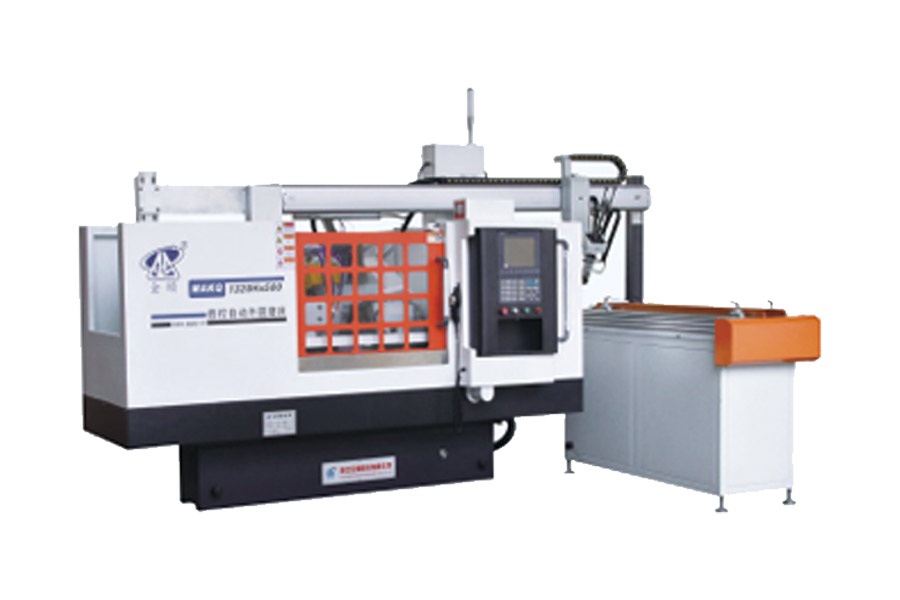
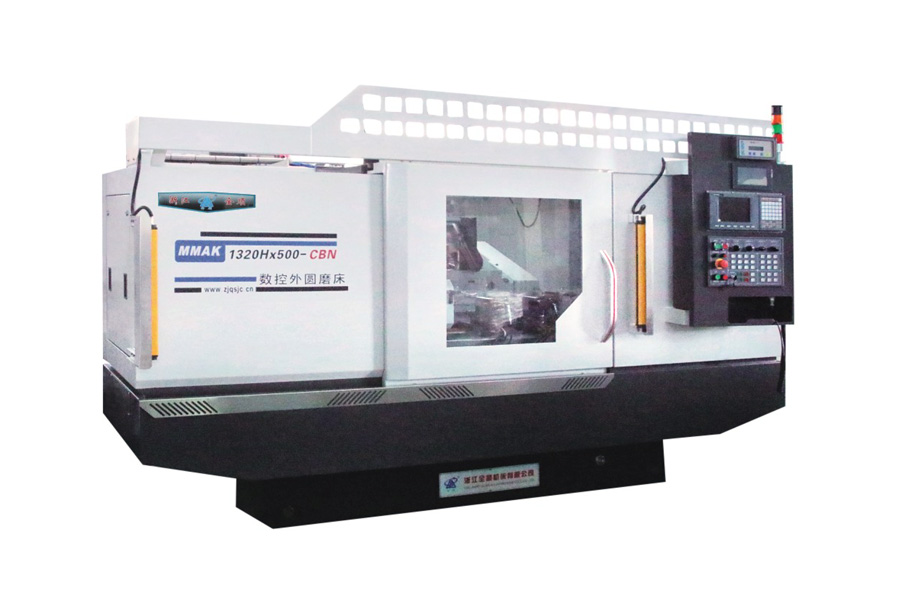
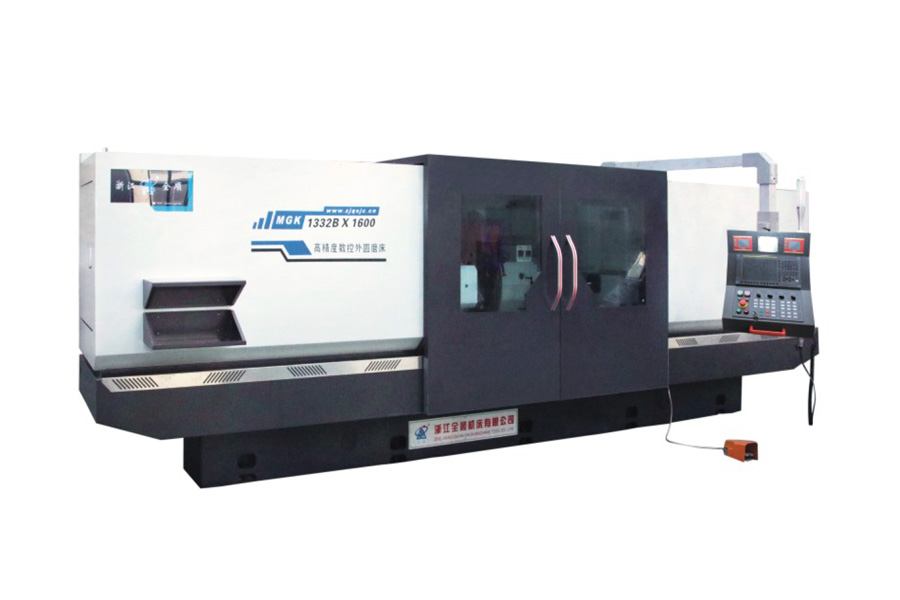
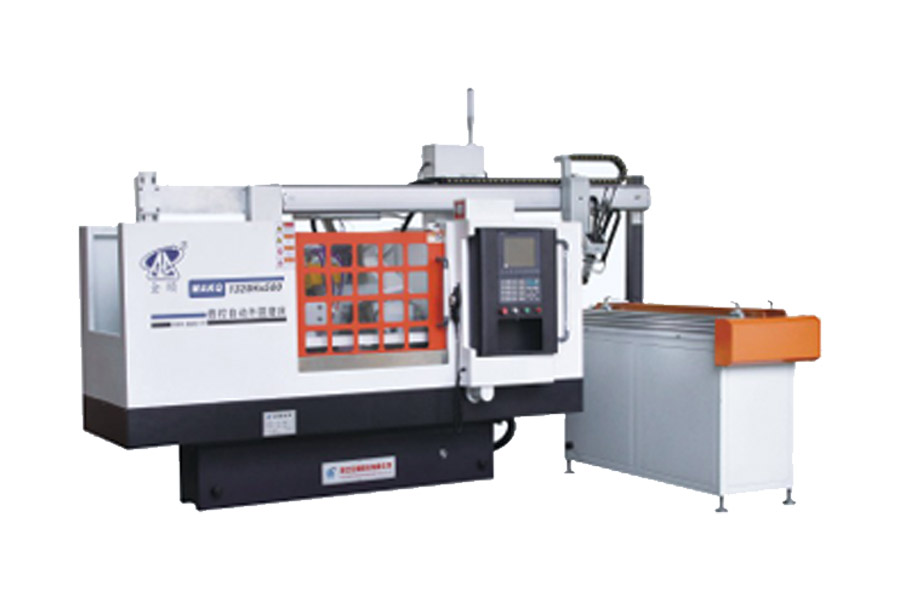 Automatic CNC Cylindrical Grinding Machine with Integrated LoadingThis automated cylindrical grinder pairs dual-channel control with left/right manipulator access, making it relevant when comparing integrated loading options for high-volume grinding.View Product →
What to specify before signing
Part presentation and gripper design
Ask for a handling study, not just a robot payload figure. The study should show how the raw part arrives, how it is oriented, where the gripper contacts it, and how the finished part leaves without touching a finished diameter. For ground surfaces, soft jaws, V-blocks, magnetic grippers, or custom fingers may be needed.
Machine interface and cycle time
Calculate cycle time from door open to door close, including gripper travel, clamping confirmation, grinding time, wheel dressing, and part exchange. A loader that saves 20 seconds of manual handling but adds 15 seconds of waiting at the door delivers little real capacity. The interface should also define what happens after a power loss, a dropped part, or a gauge rejection.
Safety, chip control, and maintenance
Grinding produces fine chips, coolant mist, and wheel wear debris. The loader needs protection that does not block daily cleaning. Safety fencing, light curtains, and door interlocks must match the site’s risk assessment. Maintenance access matters too: a compact cell that cannot be cleaned quickly will lose availability.
Changeover and part family
If the shop runs one part number for months, changeover is a minor issue. If it runs small batches, changeover can decide the project. Specify how long it takes to swap grippers, reload part programs, adjust magazine lanes, and prove the first part.
Check quality and payback together
A robot loader should be judged on first-pass yield as well as pieces per hour. Look for repeatable seating, stable clamping, and a clear path for rejected parts. If the loader pushes a bad part into the grinder, automation simply makes scrap faster.
For payback, use a simple model: labor hours removed, extra grinder hours gained, scrap reduction, and rework avoided. Then add the costs that are easy to miss: grippers, conveyors, guarding, commissioning, training, spare parts, and downtime during integration. A robot loader is strongest when the grinder is already the bottleneck and the part family is stable enough to justify the engineering.
For related reading on cell design and operator involvement, see this article on automatic loading and unloading in CNC cylindrical grinding.
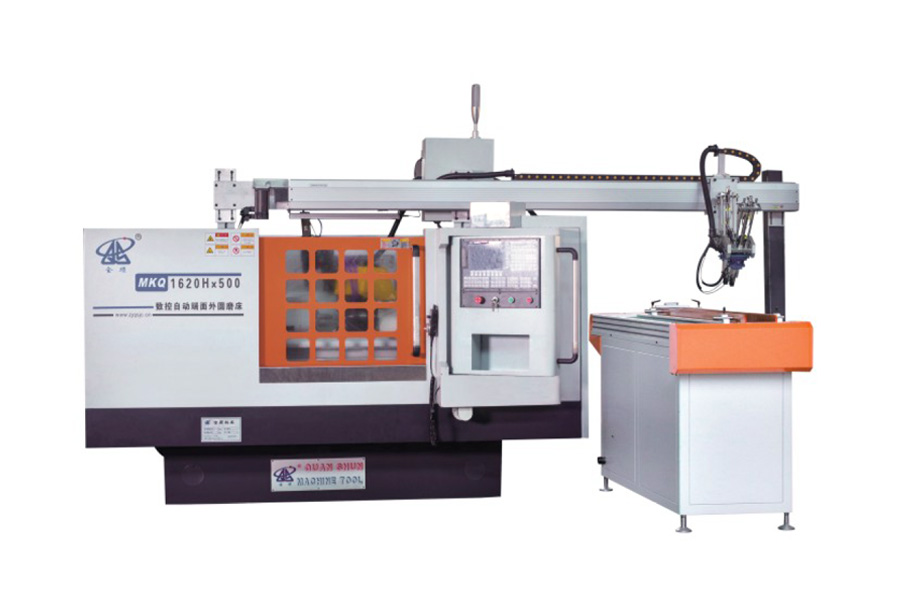
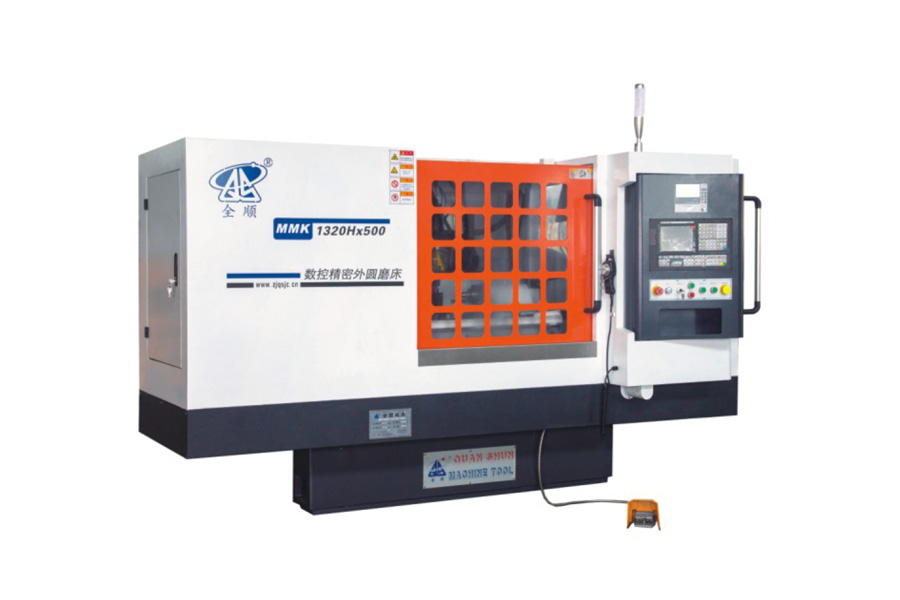
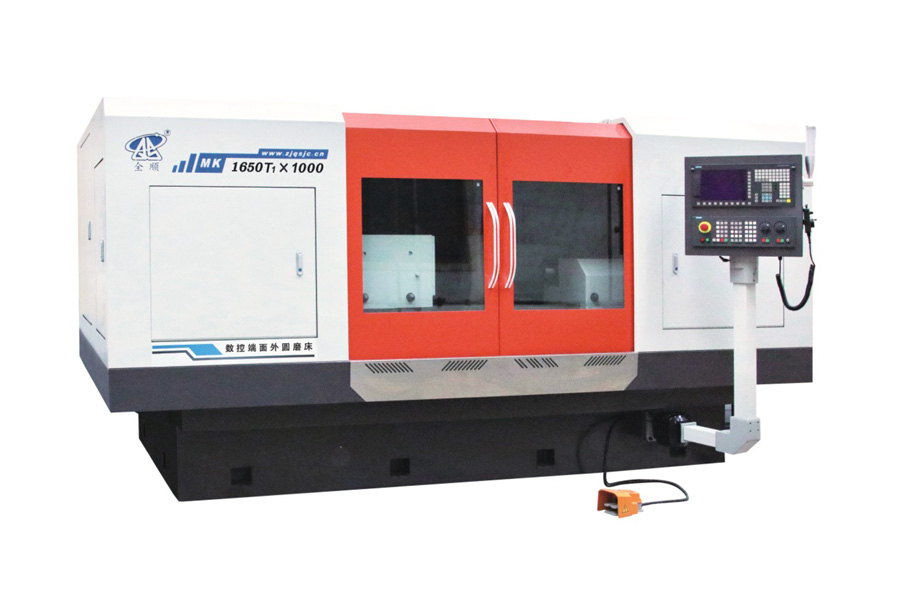
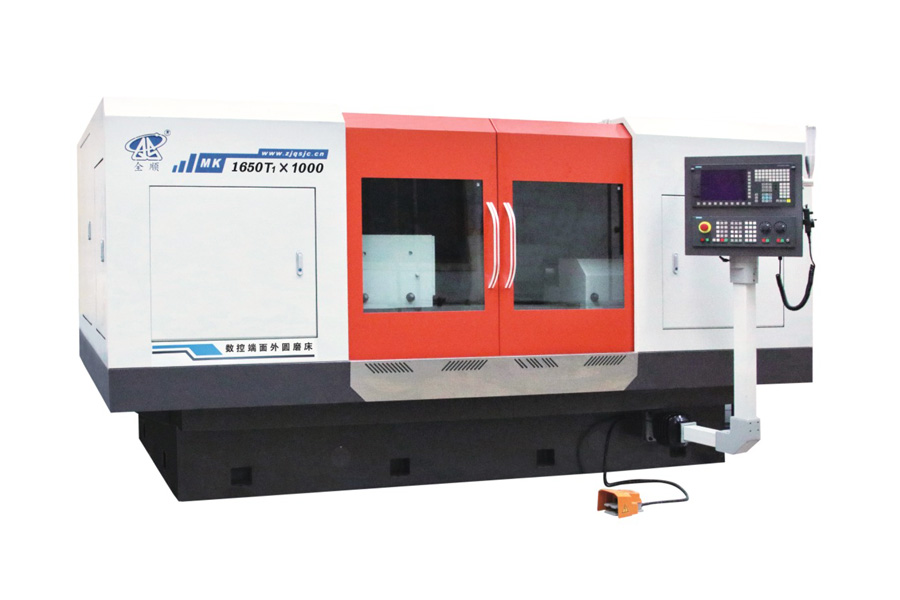
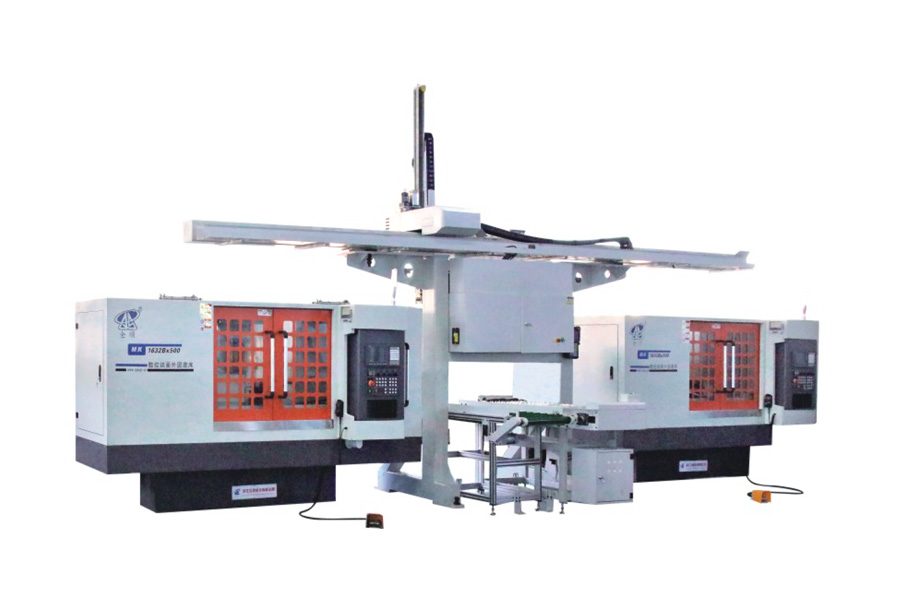 Automatic CNC Face and Cylindrical Grinding MachineA fully automatic cylindrical grinder for high-volume production, suited to discussions of grinder-based loading and linking multiple machines into automated lines.View Product →
Where a grinder builder adds value
Zhejiang Quanshun Machine Tool Co., Ltd. is a grinder builder rather than a robot brand, so its automatic loading range is built around grinding machines. The company describes itself as founded in 2003, with more than 35,000 square meters of plant, over 210 precision machines, and exports to more than 45 countries. Those figures are self-reported, but they explain why the loader question should start with the grinding process.
That approach is useful when the workpiece needs special workholding, a dedicated gauge, or a custom grinding cycle. A robot loader can then be specified around the machine rather than adapted to it afterward. The result is a more practical cell: one supplier interface for the grinder, loader, guarding, and commissioning, with fewer gaps between mechanical design and production reality.
The best robot loader is the one that keeps the grinding process stable, not the one with the most impressive robot specification. Start with the part, prove the handling, measure the cycle, and then commit to the cell.