0086-15068518279 (Chinese)/001-5416026691 (English)



 EN
EN
 中文简体
中文简体Content
- 1 NC vs CNC: What Actually Differs Under the Hood
- 2 Why CNC Cylindrical Grinders Occupy the Critical Middle Ground
- 3 Precision Benchmarks: What CNC Cylindrical Grinding Actually Achieves
- 4 Industries Where CNC Cylindrical Grinders Are Non-Negotiable
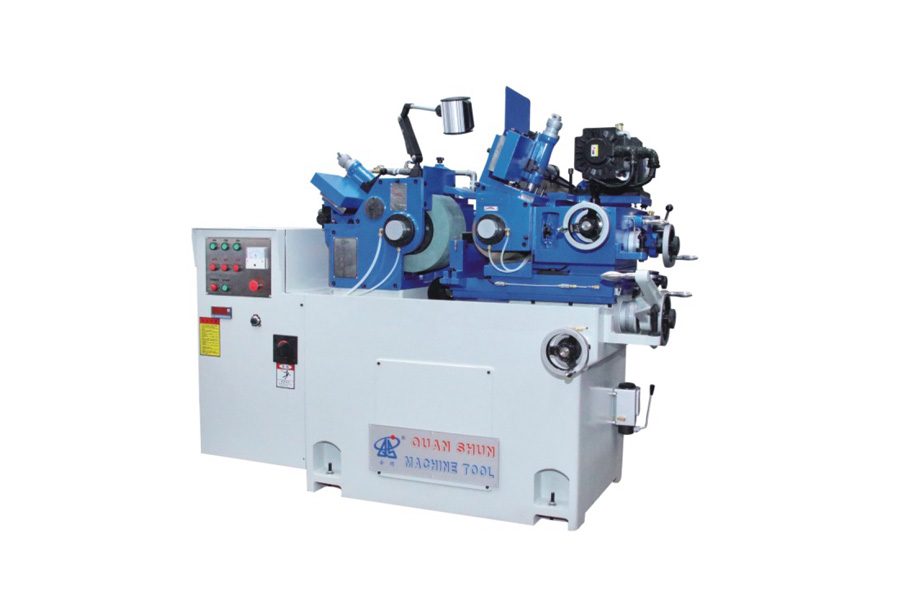
- 5 CNC Cylindrical Grinder Configurations: Matching Machine Type to Application
- 6 Critical Operational Factors That Determine CNC Grinding Outcomes
- 7 When NC Grinding Still Makes Sense
- 8 Integration with Modern Manufacturing Ecosystems
- 9 Selecting a CNC Cylindrical Grinder: Practical Specification Checklist
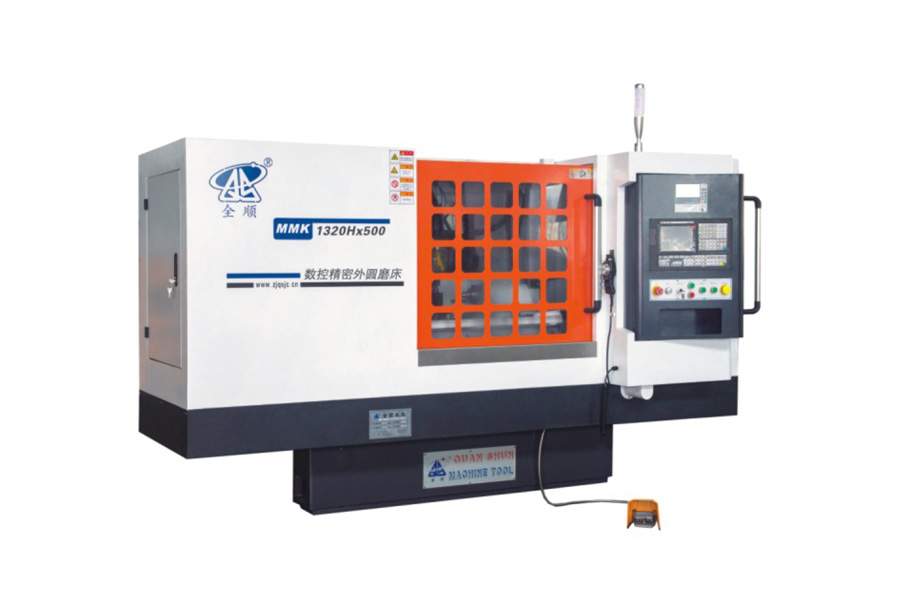
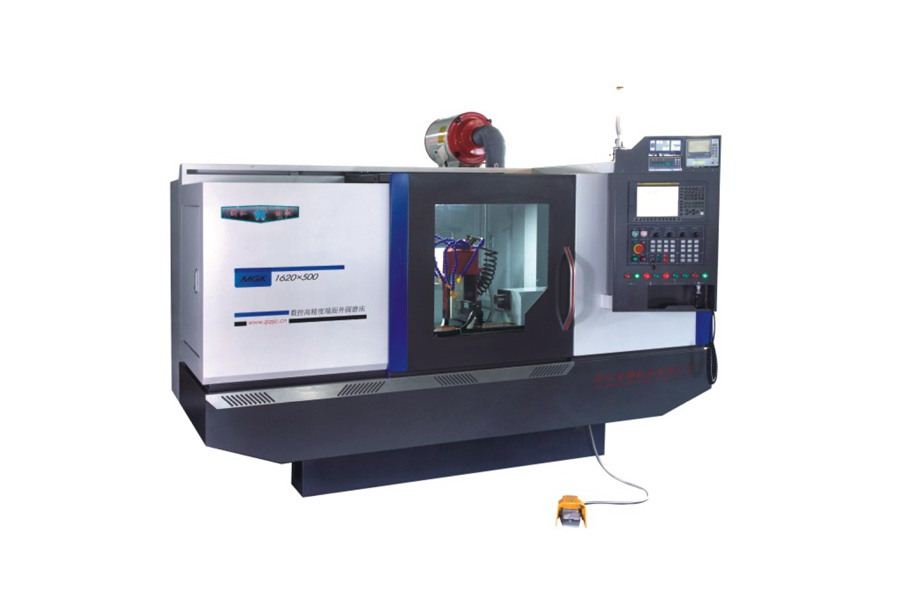
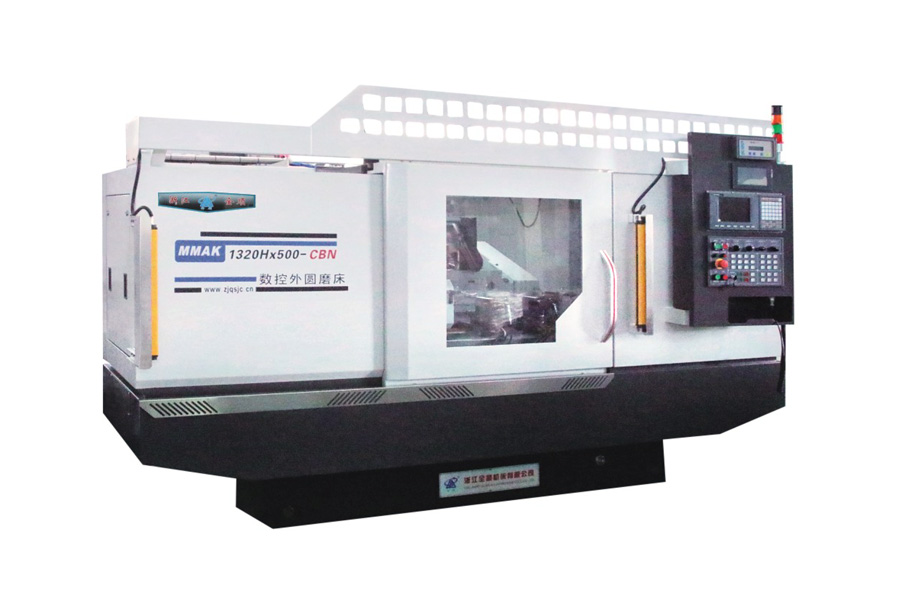
When comparing NC (Numerical Control) and CNC (Computer Numerical Control) grinding systems, CNC cylindrical grinders represent a decisive leap in precision, repeatability, and production efficiency. For manufacturers requiring tight tolerances—often within ±0.001 mm—and consistent output across high-volume runs, CNC cylindrical grinders are not simply an upgrade; they are the operational backbone that bridges the gap between legacy NC systems and fully automated modern production.
Understanding what separates these two technologies—and why CNC cylindrical grinders occupy such a critical role—helps engineers and procurement teams make informed decisions about equipment investment and process design.
NC vs CNC: What Actually Differs Under the Hood
NC systems operate from pre-punched tape or fixed sequential instructions. Once a program is loaded, the machine executes it without feedback or self-correction. CNC systems, by contrast, use a microprocessor-based controller that continuously reads, adjusts, and stores programs digitally. This architectural difference has profound practical consequences.
| Feature | NC System | CNC System |
|---|---|---|
| Program Storage | Punched tape / fixed sequence | Digital memory (unlimited programs) |
| Real-time Feedback | None | Continuous sensor feedback loop |
| Parameter Adjustment | Manual re-programming required | On-screen edits in seconds |
| Axis Control | Typically 2-axis | 2 to 5+ axes simultaneously |
| Repeatability | ±0.01 mm typical | ±0.001 mm or better |
| Operator Dependency | High | Low to moderate |
In cylindrical grinding specifically, these differences translate directly into surface finish quality, dimensional accuracy, and changeover time—three metrics that define profitability in precision manufacturing.
Why CNC Cylindrical Grinders Occupy the Critical Middle Ground
CNC cylindrical grinders sit at the intersection of high-precision manual craft and fully automated production lines. They are sophisticated enough to handle complex geometries—taper grinding, multi-diameter shafts, thread forms—yet flexible enough to be reprogrammed for a new workpiece within minutes rather than hours.
This flexibility is the defining value. Consider a job shop producing aerospace shafts in batches of 50 to 200 units. An NC grinder would require physical reconfiguration and potentially a skilled setup technician for each new part number. A CNC cylindrical grinder retrieves the saved program, runs an automatic wheel dress cycle, and begins production—reducing setup time from 2–4 hours to under 30 minutes in many real-world applications.
Key Process Capabilities That NC Cannot Match
- In-process gauging: Active measurement during grinding allows the controller to automatically compensate for wheel wear, maintaining diameter within tolerance without operator intervention.
- Automatic wheel dressing: CNC controllers execute dressing routines at programmed intervals, ensuring consistent wheel geometry and surface finish throughout a production run.
- Multi-step grinding cycles: Rough, semi-finish, and finish passes with different feed rates can be programmed as a single automatic cycle, optimizing both material removal rate and final surface quality.
- Complex contour grinding: Simultaneous X and Z axis interpolation enables the production of curved or profiled surfaces that are geometrically impossible on a standard NC machine.
Precision Benchmarks: What CNC Cylindrical Grinding Actually Achieves
Precision is not an abstract claim—it is measurable, and the numbers matter when specifying components for bearings, hydraulic cylinders, gearboxes, or turbine shafts.
- Dimensional tolerance: Production-grade CNC cylindrical grinders routinely achieve diameter tolerances of IT5 (approximately ±0.001 mm on a 50 mm shaft), with high-end systems reaching IT4 or IT3 in controlled environments.
- Surface finish: Ra values of 0.2–0.4 µm are standard in finish grinding; with fine-grain wheels and controlled parameters, Ra below 0.1 µm is achievable.
- Roundness: CNC systems with hydrostatic workhead spindles can achieve roundness errors below 0.2 µm—critical for bearing race grinding.
- Cylindricity: Across a 500 mm workpiece length, cylindricity deviations of 1–3 µm are achievable with proper machine calibration and thermal compensation.
By comparison, NC cylindrical grinders typically deliver tolerances in the IT7–IT6 range, which is adequate for general mechanical components but insufficient for precision bearings, fuel injection components, or medical device shafts.
Industries Where CNC Cylindrical Grinders Are Non-Negotiable
Several sectors depend on CNC cylindrical grinding as a process-critical step, not a convenience:
Automotive Drivetrain Components
Camshafts, crankshafts, transmission shafts, and ABS sensor rings require grinding to IT5 or better, with surface finishes below 0.4 µm Ra. High-volume automotive suppliers typically run CNC cylindrical grinders in automated cells, achieving cycle times under 90 seconds per part for medium-diameter shafts.
Aerospace and Defense
Landing gear actuators, turbine blade root forms, and hydraulic valve spools demand both extreme precision and full process traceability. CNC systems provide the digital audit trail—recording actual feed rates, dressing intervals, and in-process measurement data—that aerospace quality standards require.
Bearing Manufacturing
Inner and outer ring grinding for precision bearings (ABEC 5, 7, and 9 grades) represents perhaps the most demanding application for cylindrical grinding. ABEC 7 bearings require roundness within 2.5 µm and diameter tolerances of ±2.5 µm—achievable only with CNC systems equipped with active gauging and vibration-damped machine bases.
Medical Device Manufacturing
Surgical instrument shafts, orthopedic implant stems, and dental handpiece components are ground from titanium alloys and stainless steel to tolerances of ±0.005 mm or tighter. The biocompatibility requirements additionally demand burr-free, scratch-free surfaces—outcomes that depend entirely on precise, repeatable CNC grinding parameters.
CNC Cylindrical Grinder Configurations: Matching Machine Type to Application
Not all CNC cylindrical grinders serve the same purpose. The major configurations each target specific workpiece geometries and production scenarios:
| Machine Type | Workpiece Type | Typical Application |
|---|---|---|
| Universal OD/ID Grinder | External and internal diameters | Job shops, prototype, mixed production |
| Centerless CNC Grinder | Bars, pins, rollers (no centers needed) | High-volume pin and roller production |
| CNC Camshaft/Crankshaft Grinder | Multi-lobe or eccentric shafts | Automotive engine components |
| CNC Thread Grinder | Threaded shafts, lead screws | Precision lead screws, ball screw shafts |
| CNC Plunge Grinder | Short, specific-diameter features | Bearing seats, journal grinding |
Choosing the wrong configuration—for example, using a universal OD grinder for a high-volume camshaft application—results in cycle times two to three times longer than a dedicated CNC camshaft grinder with C-axis interpolation.
Critical Operational Factors That Determine CNC Grinding Outcomes
Owning a CNC cylindrical grinder does not automatically guarantee precision. Several operational variables must be managed to extract the machine's full capability:
Thermal Stability
Grinding generates heat that causes both workpiece and machine frame expansion. A temperature change of just 1°C in a steel shaft 300 mm long causes approximately 3.5 µm of dimensional change. CNC grinders used for sub-micron work require temperature-controlled coolant, machine warm-up protocols of 30–60 minutes, and climate-controlled grinding rooms held at 20°C ±0.5°C.
Wheel Selection and Dressing
The abrasive specification—grain type, grit size, bond hardness, and structure—must match the workpiece material, required finish, and removal rate. A poorly matched wheel on a CNC machine produces the same poor results as on an NC machine. Wheel dressing parameters (lead, depth, overlap ratio) programmed into the CNC cycle are as critical as the grinding parameters themselves.
Workholding and Alignment
Between-center grinding requires properly ground and aligned dead centers. Runout of just 5 µm at the center can translate directly to roundness error in the finished part. Steady rests for long workpieces must be positioned and adjusted correctly, as CNC control cannot compensate for mechanical misalignment in the workholding setup.
In-Process Gauging Integration
Modern CNC cylindrical grinders equipped with air or contact gauges measure the workpiece diameter while grinding. The gauge feeds real-time data to the controller, which automatically adjusts infeed to compensate for wheel wear. Without this feedback loop, operators must perform manual measurements and offsets—reintroducing the human-variability that CNC systems are designed to eliminate.
When NC Grinding Still Makes Sense
Despite the clear advantages of CNC systems, NC cylindrical grinding retains legitimate applications in specific contexts:
- Simple, dedicated production: Single-component, high-volume production of a geometrically simple part (e.g., a plain cylindrical pin to IT7 tolerance) may not justify the higher cost and complexity of CNC equipment.
- Low-budget maintenance shops: Facilities performing occasional in-house reconditioning of worn shafts, where tolerances of ±0.01–0.02 mm are acceptable, can operate NC grinders effectively.
- Regions with limited CNC expertise: In some manufacturing environments, NC machines are preferred because they rely on mechanical skill rather than programming knowledge—though this is an increasingly rare consideration as CNC operator training has become widely accessible.
For any application requiring tolerances tighter than IT6, complex geometries, multiple part variants, or documented process traceability, NC grinding is functionally inadequate—not a cost-saving alternative.
Integration with Modern Manufacturing Ecosystems
CNC cylindrical grinders increasingly function not as standalone machines but as networked nodes in digital manufacturing environments. This integration capability is absent from NC systems and represents another dimension of the technology gap:
- DNC (Direct Numerical Control) connectivity: Programs are transmitted from a central server to the machine controller, eliminating manual program loading and reducing the risk of using outdated part programs.
- SPC data export: In-process gauge measurements are logged and exported to statistical process control software, enabling real-time Cpk monitoring and early detection of process drift—before out-of-tolerance parts are produced.
- Robot integration: CNC grinders with standardized communication interfaces (OPC-UA, MTConnect) can be integrated into automated loading/unloading cells, enabling lights-out grinding operations during off-shifts.
- Predictive maintenance: Vibration sensors and spindle load monitoring feed data to analytics platforms that predict wheel glazing, bearing wear, or coolant system issues before they cause scrap or machine damage.
A fully integrated CNC cylindrical grinding cell can reduce scrap rates by 60–80% compared to operator-dependent NC processes, based on documented case studies in automotive supplier environments where Cpk values improved from below 1.0 to above 1.67 after transitioning to CNC with active gauging.
Selecting a CNC Cylindrical Grinder: Practical Specification Checklist
When evaluating CNC cylindrical grinders for a specific application, the following specification parameters should be verified against production requirements:
- Grinding length and swing diameter: Ensure the machine's capacity covers the maximum workpiece dimensions with margin.
- Workhead and tailstock spindle accuracy: Request runout specifications; precision applications require below 1 µm spindle runout.
- Number of CNC axes: Two-axis (X, Z) covers most cylindrical work; add C-axis for non-round forms, B-axis for internal grinding attachment swivel.
- Wheel head configuration: Single, twin, or multi-wheel heads affect flexibility; twin heads allow simultaneous OD and ID grinding.
- Gauging system: In-process air gauging is preferred for precision; post-process gauging with automatic offset feedback is the minimum for unmanned operation.
- Controller platform: Verify availability of application-specific grinding cycles (oscillation, plunge, traverse) and compatibility with plant DNC systems.
- Coolant system filtration: Fine-grain grinding for Ra below 0.2 µm requires coolant filtered to 10 µm or finer to prevent surface scratching from abrasive particles.