0086-15068518279 (Chinese)/001-5416026691 (English)



 EN
EN
 中文简体
中文简体Content
- 1 Understand Your Part Requirements First
- 2 Machine Types and When to Use Each
- 3 Spindle and Bearing System: The Heart of Precision
- 4 Machine Bed and Structural Rigidity
- 5 CNC Control and In-Process Gauging
- 6 Grinding Wheel Compatibility and Dressing System
- 7 Coolant System Design and Filtration
- 8 Automation Integration and Batch Production Needs
- 9 Acceptance Testing: How to Verify Machine Performance Before Purchase
- 10 Installation Environment Requirements
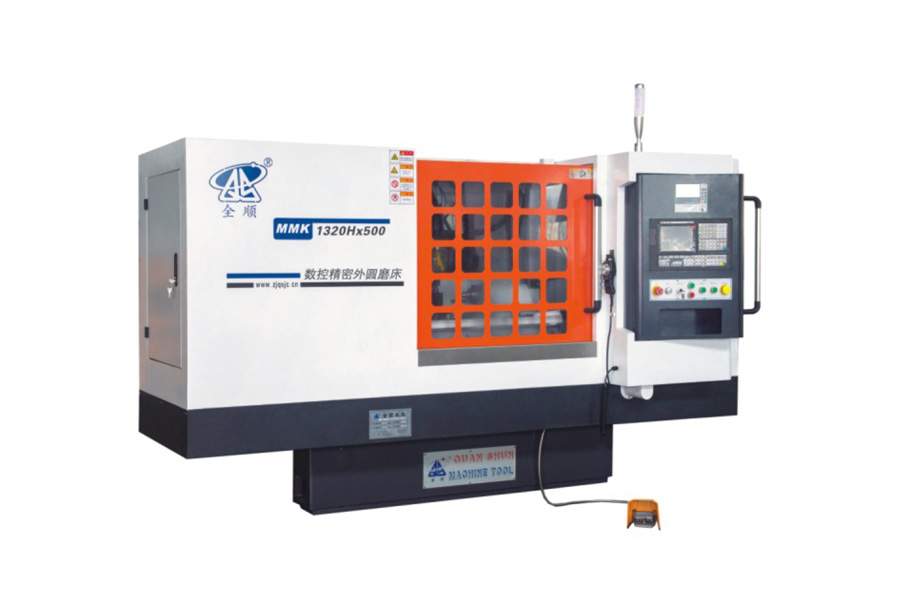
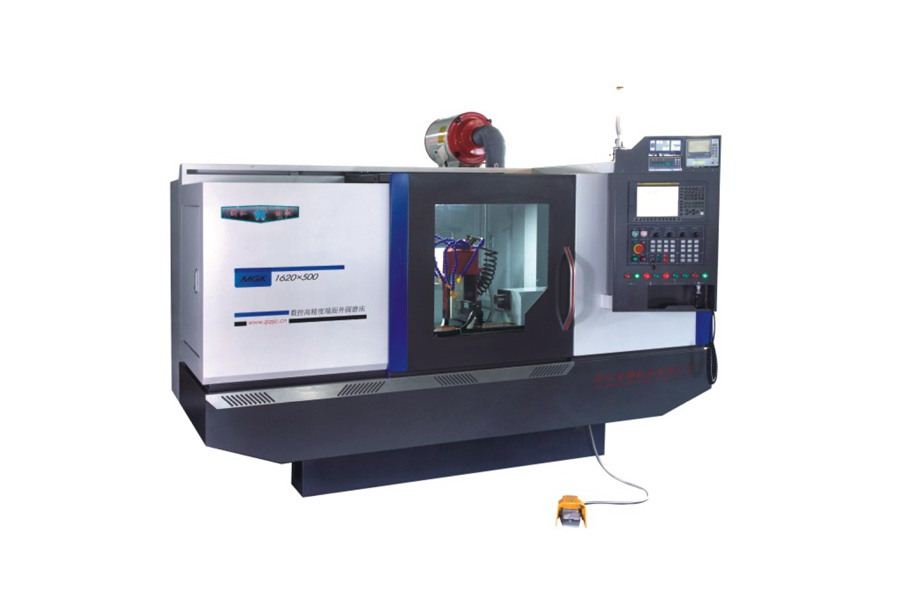
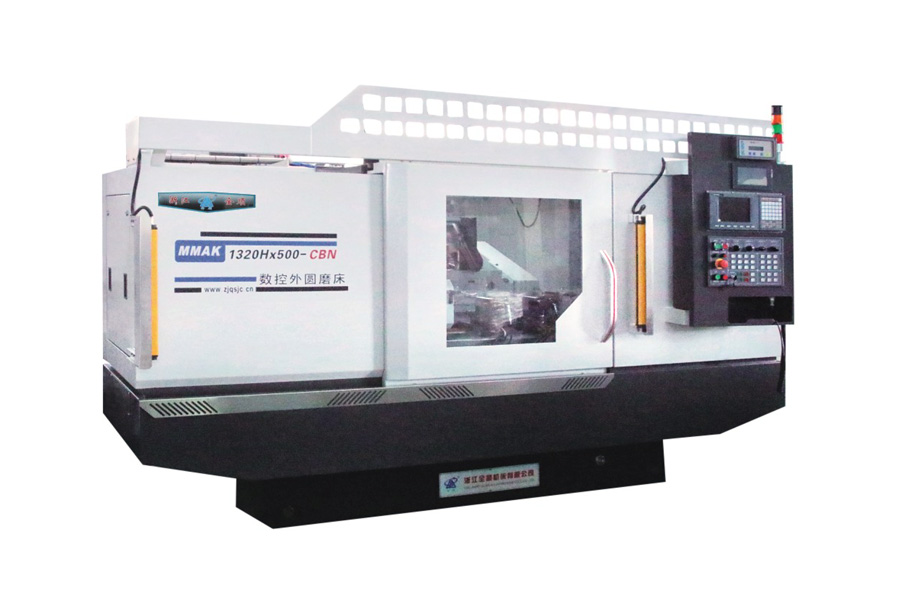
Choosing the right CNC cylindrical grinding machine for high precision parts starts with one core principle: match the machine's achievable tolerances and rigidity to your part's tightest dimensional and surface finish requirements. For most high-precision applications, this means targeting machines capable of roundness within 0.1 µm, cylindricity within 0.5 µm, and surface roughness Ra ≤ 0.05 µm. Beyond specs, the right choice depends on part geometry, production volume, material, and process integration. The sections below break down every key decision factor.
Understand Your Part Requirements First
Before evaluating any machine, define the non-negotiable specifications of your workpiece. High precision is a wide spectrum — a bearing journal ground to IT5 tolerance demands very different equipment than an aerospace shaft ground to IT3.
Key Part Parameters to Establish
- Dimensional tolerance: IT3–IT5 requires machine geometric accuracy below 0.3 µm; IT6–IT7 can tolerate up to 1 µm machine error.
- Surface roughness (Ra): Mirror finishes (Ra 0.025–0.05 µm) require CBN or diamond wheel capability and hydrostatic spindle bearings.
- Part diameter and length: Confirm the machine's maximum swing and distance between centers has at least 20% headroom over your largest part.
- Material hardness: Parts above 60 HRC need machines with higher grinding wheel spindle power (typically ≥ 15 kW) and thermal-stable structures.
- Geometric complexity: Multiple diameters, tapers, and shoulders in one setup favor multi-axis or universal cylindrical grinders.
Machine Types and When to Use Each
CNC cylindrical grinders are not a monolithic category. Selecting the wrong type — even a high-quality one — leads to compromised accuracy or unnecessary cost.
| Machine Type | Best For | Typical Roundness | Limitations |
|---|---|---|---|
| Plain/External CNC | Simple OD grinding, high volume | 0.5–1 µm | No internal or face grinding |
| Universal CNC | OD + ID + tapers + faces in one setup | 0.2–0.5 µm | Slower cycle times; higher cost |
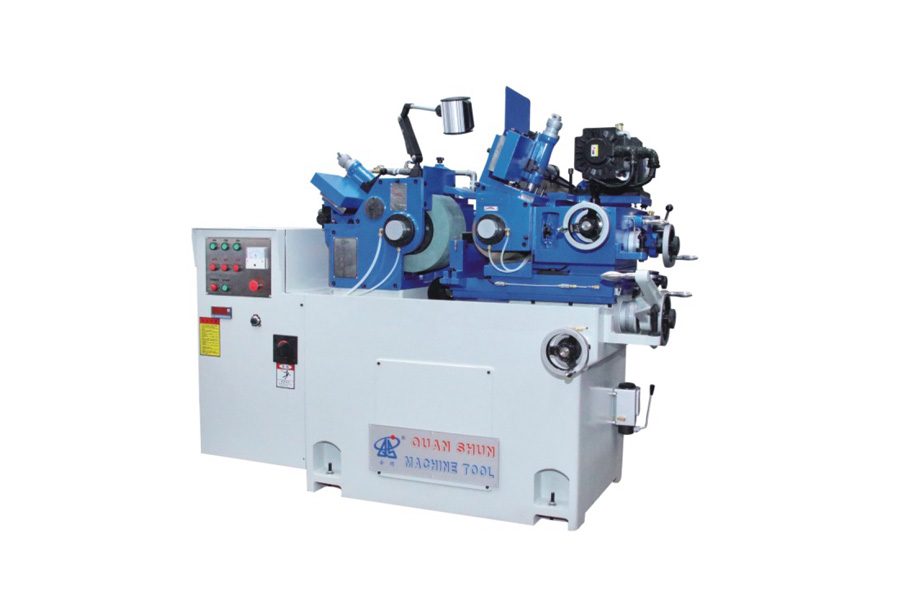
| Centerless CNC | High-volume, chucking-free OD grinding | 0.3–0.8 µm | Cannot hold angular position; no shoulder grinding |
| Plunge/Form CNC | Profiles, grooves, complex contours | 0.3–1 µm | Wheel dressing complexity |
| Ultra-Precision CNC | Optics, gauges, master parts | < 0.1 µm | Requires temperature-controlled room; high cost |
For most precision part families — spindles, hydraulic components, tooling bodies — a universal CNC cylindrical grinder delivers the best balance of flexibility and achievable accuracy.
Spindle and Bearing System: The Heart of Precision
The grinding wheel spindle is the single largest determinant of achievable surface finish and roundness. Two dominant bearing technologies exist:
Hydrostatic Spindle Bearings
Hydrostatic oil-film bearings eliminate metal-to-metal contact entirely. They achieve radial runout below 0.05 µm and have infinite stiffness at operating pressure (typically 50–100 bar). They are the standard choice for ultra-precision and optical-grade grinding. The trade-off is complexity in the oil supply and temperature control system.
Precision Angular Contact Bearings
Pre-loaded ceramic or steel angular contact bearing spindles achieve radial runout of 0.1–0.3 µm at a significantly lower system cost. They are appropriate for IT4–IT6 work and are more maintainable in a general production environment.
Rule of thumb: If your target Ra is below 0.1 µm, specify a hydrostatic spindle. For Ra 0.1–0.4 µm, high-precision rolling element bearings are sufficient.
Machine Bed and Structural Rigidity
Vibration and thermal deformation are the two primary enemies of cylindrical grinding accuracy. Machine bed material directly addresses both:
- Mineral cast (polymer concrete) beds offer vibration damping 6–10× better than gray cast iron and thermal expansion coefficients close to ceramic tooling. Preferred for sub-micron work.
- High-grade gray cast iron (GG-30 or above) remains the industry standard for production machines, offering good damping and long-term geometric stability when properly stress-relieved.
- Granite surfaces are occasionally used on ultra-precision machines for their near-zero thermal expansion but are less common on full CNC grinders due to mass and cost.
Check the machine's guideways as well: hydrostatic linear guideways produce no stick-slip and are ideal for slow, ultra-precise infeed axes. Linear roller guides (with precision preload class C3 or better) are appropriate for standard high-precision production.
CNC Control and In-Process Gauging
For high-precision parts, the CNC controller and measurement loop are as important as the mechanical structure. Key capabilities to evaluate:
Linear Scale Resolution and Closed-Loop Feedback
Machines targeting sub-micron tolerances must use glass linear encoders with 0.01 µm resolution (10 nm) on all critical axes. Semi-closed-loop systems relying on ballscrew encoders alone introduce reversal error and are inadequate for IT3–IT4 work.
In-Process Diameter Gauging
Integrated contact gauging systems measure the workpiece diameter during grinding and feed corrections back to the infeed axis in real time. This compensates for wheel wear, thermal growth, and elastic deflection — all of which can introduce errors of 2–5 µm per hour in uncompensated systems. In-process gauging is essential for Cpk ≥ 1.67 process capability on tolerances below ±5 µm.
Thermal Compensation Software
Evaluate whether the CNC offers active thermal drift compensation via temperature sensors on the spindle housing, bed, and coolant. Without it, dimensional drift in a production shift can exceed 3–8 µm on machines without mineral cast beds.
Grinding Wheel Compatibility and Dressing System
The machine must be evaluated together with its dressing system, because achievable surface finish is determined by the combination of wheel specification and dressing precision.
- CBN (cubic boron nitride) wheels are the standard for hardened steel and carbide parts, maintaining profile accuracy far longer than aluminum oxide. Confirm the machine spindle speed range covers CBN's optimal surface speed of 80–120 m/s.
- Diamond rotary dressers with CNC-controlled profiling are required for contour grinding and for maintaining wheel sharpness within ±0.5 µm profile accuracy.
- On-machine wheel balancing (automatic or manual) is necessary when wheel diameter exceeds 400 mm or when surface speed exceeds 60 m/s, to eliminate vibration-induced waviness.
Coolant System Design and Filtration
Thermal management through coolant is not secondary. Inadequate coolant delivery is among the top three causes of surface burn and dimensional variation in precision cylindrical grinding.
- High-pressure coolant (40–80 bar) through the grinding wheel or via shoe-type nozzles dramatically reduces grinding zone temperature and improves surface finish by 30–50% compared to flood cooling.
- Filtration to ≤ 10 µm particle size is required to prevent abrasive contamination of the guideways and spindle bearings, particularly when grinding carbide or ceramics.
- Coolant temperature control (±0.5°C) is critical for sub-2 µm tolerance work. A 1°C change in coolant temperature can cause 1–3 µm dimensional shift on a steel workpiece 200 mm in length.
Automation Integration and Batch Production Needs
If the machine will run in a production cell rather than as a standalone tool-room machine, evaluate automation readiness:
- Robot loading interface: Confirm the machine has a standardized gripper access zone and supports EUROMAP or equivalent handshake protocols.
- Post-process gauging data output: Machines with OPC-UA or MTConnect data output allow SPC (Statistical Process Control) integration without manual measurement entry, enabling real-time Cpk monitoring.
- Automatic wheel dressing cycles: Programmable dressing at fixed intervals or triggered by size drift data extends unmanned runtime significantly — critical for lights-out shifts.
Acceptance Testing: How to Verify Machine Performance Before Purchase
Never accept a machine based on specification sheets alone. Require a formal acceptance test using your own representative workpiece or a defined test piece. Key checks include:
- Roundness test: Grind a hardened steel cylinder and measure with a roundness tester (not just a V-block). Target: ≤ the machine's published roundness spec, verified at multiple positions along the Z-axis.
- Cylindricity test: Measure taper and barrel/saddle form over the full grinding length. A 200 mm long test piece should show cylindricity within the stated spec.
- Repeatability test: Grind 20 consecutive parts without adjusting offsets. Standard deviation of diameter should be ≤ 1/5 of your tolerance band.
- Thermal stability test: Run the machine for 4 hours under production conditions and measure dimensional drift every 30 minutes. Drift should stabilize within 2 µm after warmup.
- Surface finish test: Confirm Ra values with a calibrated contact profilometer at multiple locations on the test piece.
Installation Environment Requirements
Even the most capable machine will underperform if installed incorrectly. High-precision CNC cylindrical grinders impose real environmental demands:
- Floor vibration: Machines grinding to sub-micron tolerances typically require vibration isolation pads or active anti-vibration mounts. Floor vibration above 1 µm amplitude at 10–50 Hz will directly appear in surface finish.
- Temperature stability: The workshop should maintain 20°C ± 1°C for precision grinding. Ultra-precision machines (Ra < 0.05 µm) typically require a dedicated temperature-controlled room at ±0.5°C.
- Foundation: Confirm floor load capacity (typically 8,000–20,000 kg for medium-large precision grinders) and that the machine can be properly leveled to within 0.02 mm/m using precision level instruments.