0086-15068518279 (Chinese)/001-5416026691 (English)



 EN
EN
 中文简体
中文简体Content
- 1 Start With The Crankshaft Sizes You Actually Service
- 2 Decide Between Fixed-Cycle CNC And Follow Type Grinding
- 3 Match Accuracy Specifications To Your Tolerance Requirements
- 4 Check In-Process Gauging Because It Changes Your Labor Cost
- 5 Evaluate Bed Construction And Vibration Control
- 6 Factor In Supplier Support And Total Cost Of Ownership
- 7 Run A Simple Payback Calculation Before You Buy
The right choice for most engine repair shops is a CNC crankshaft grinding machine with a grinding diameter range that covers your typical job mix, a positioning accuracy within 0.005mm, and either fixed-cycle or follow type pin grinding depending on how many different crankshaft profiles you process each month. Shops that mainly regrind passenger car and light truck crankshafts in moderate volume usually get the best return from a standard Crankshaft Grinding Machine with CNC control, while shops handling frequent model changes or eccentric multi-throw shafts benefit more from a follow type unit that tracks the crank pin in real time. The sections below explain how to reach that decision with your own shop's numbers.
Start With The Crankshaft Sizes You Actually Service
Before comparing machine brands or control systems, measure the crankshafts that come through your shop door every week. According to specifications published by WMT CNC Industrial Co., general crankshaft grinders are built around a rotation diameter range of roughly 750 to 1400mm, a maximum crankshaft length between 5000 and 12000mm on larger industrial models, and a center crank diameter of 140 to 250mm. A shop that only ever sees four and six cylinder automotive crankshafts does not need a machine built for marine or locomotive scale shafts, and paying for that extra travel and bed length wastes capital that could go toward tooling, training, or a second grinder.
Build a simple tally from your last twelve months of work orders. Note the shortest and longest crankshaft you ground, the largest main journal diameter, and whether any jobs involved eccentric pins beyond the standard rod journal layout. This list becomes your minimum specification sheet and prevents the common mistake of buying based on a single large job rather than your actual daily volume.
| Shop Profile | Typical Journal Range | Recommended Machine Class |
| Automotive and light truck repair | 140mm to 220mm crank diameter | Standard CNC crankshaft grinder |
| Mixed automotive and agricultural diesel | 180mm to 280mm crank diameter | Mid-range CNC with extended bed |
| Marine and heavy industrial | 250mm and above | Heavy-duty CNC or follow type grinder |
Decide Between Fixed-Cycle CNC And Follow Type Grinding
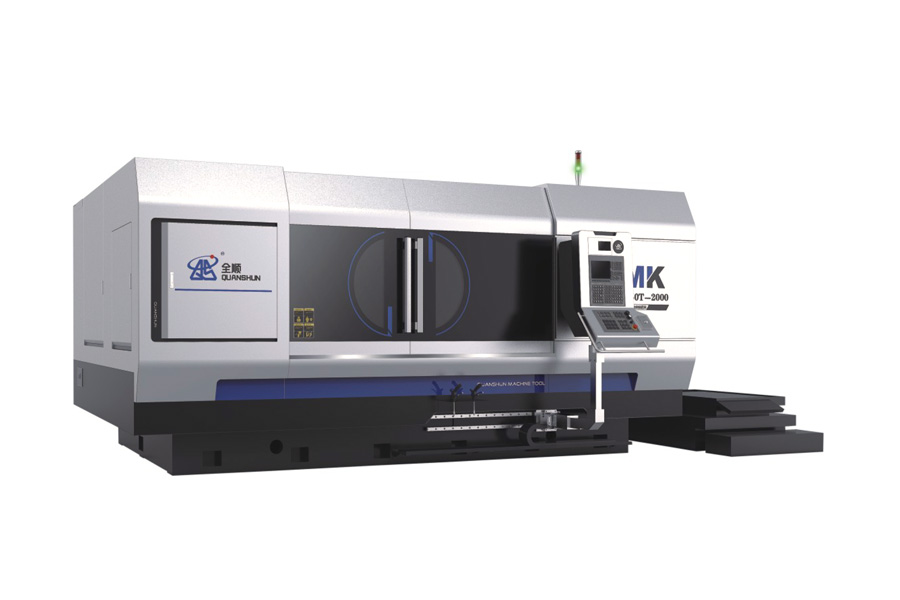
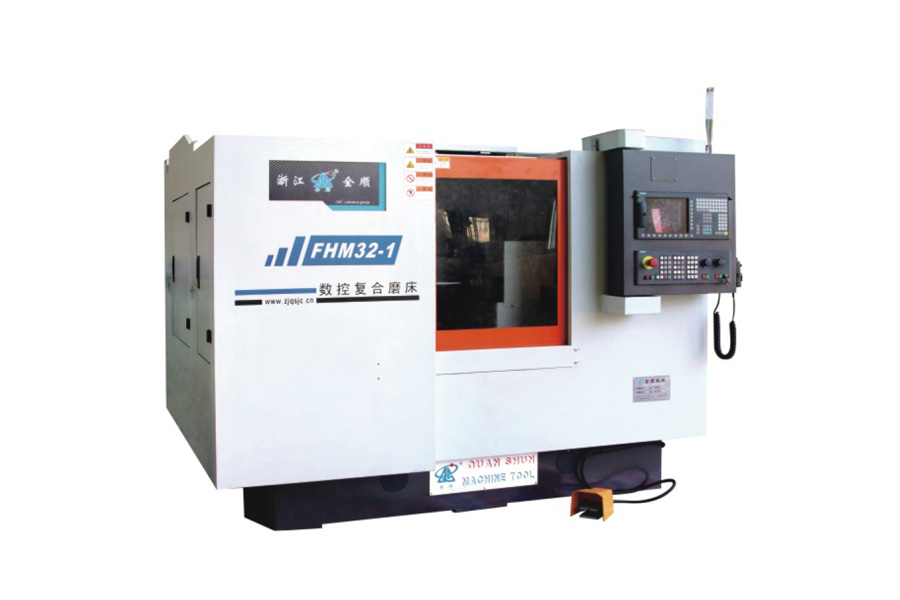
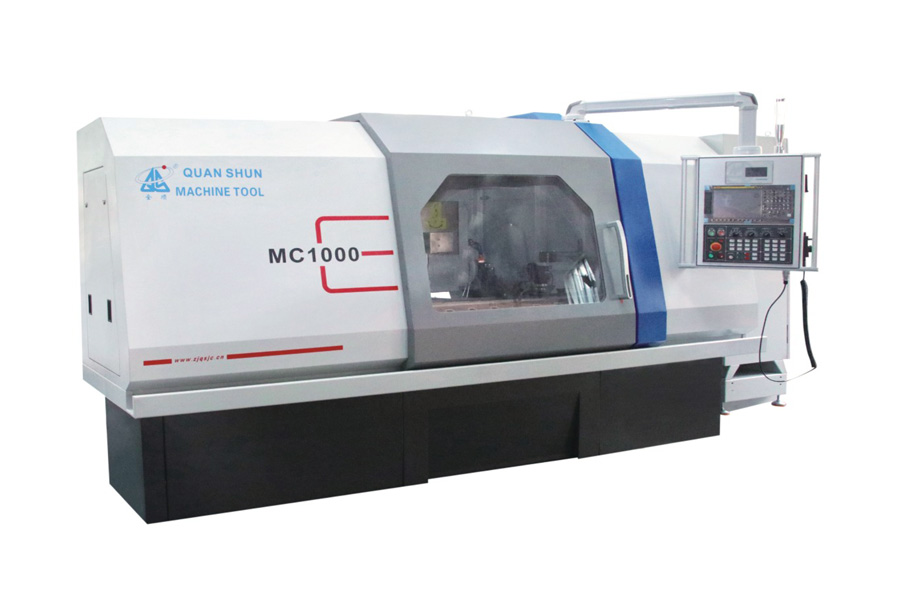
This is the decision that affects setup time more than any other feature on the machine. A fixed-cycle CNC crankshaft grinder, such as the Crankshaft Grinding Machine, uses pin-chasing technology where the wheelhead axis interpolates with the workpiece rotation axis according to a pre-calculated eccentric path. This approach grinds main and rod journals in a single clamping, which keeps parallel alignment and phase-angle positioning accurate because the part never has to be removed and re-indexed between operations.
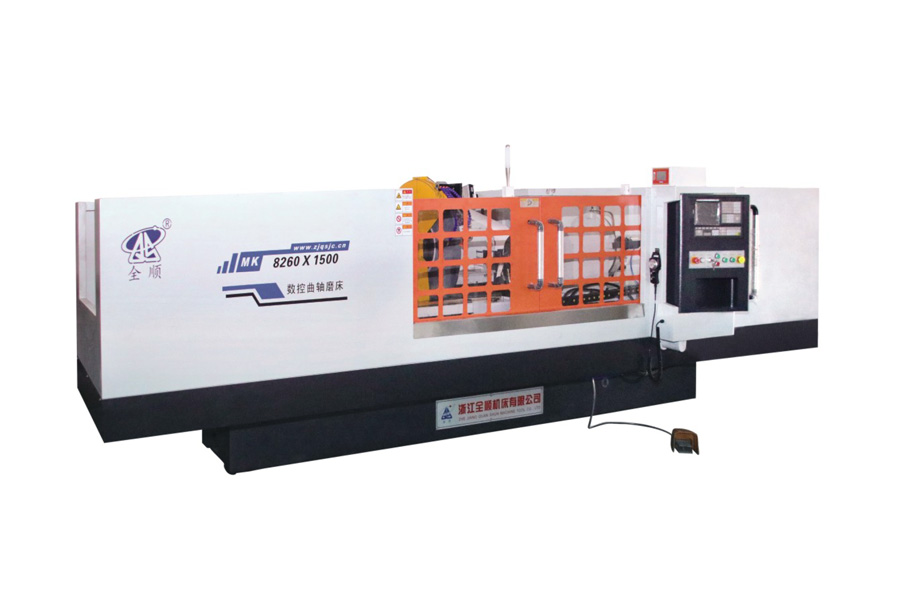
A follow type CNC crankshaft grinder takes this concept further. Instead of running a calculated cycle, the wheelhead uses high-frequency, real-time tracking to chase the eccentric pin as it moves, similar to what one industry analysis describes as a system where the workpiece rotation axis carries a high-precision rolling bearing spindle with an angle encoder for closed-loop feedback, while the grinding wheel carriage is driven by an AC servo ball screw pair for continuous path correction. This setup achieves extremely high rotation accuracy and positioning accuracy, with software that performs online automatic compensation during a single clamping of the crankshaft. The practical advantage for a repair shop is faster changeover when grinding crankshafts with different stroke lengths or throw counts, since the program adjusts the tracking path rather than requiring a mechanical eccentric fixture swap.
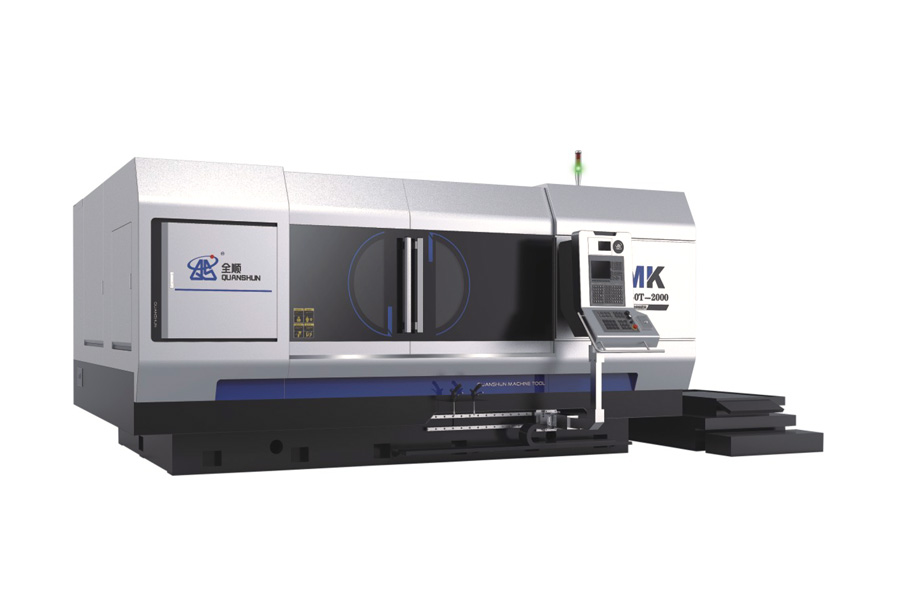
Research into virtual machining accuracy for crank pin grinders notes a useful trade-off here. Indexing grinding machines have traditionally been more accurate than CNC chasing-the-pin machines because the crank pin can be supported by shoes during rotation, making in-process gauging easier to implement. However, error mapping techniques now allow CNC follow type grinding machines to reach micron level accuracy, since most repeatable errors in size, roundness, index, and throw can be compensated through numerical control. For a repair shop, this means a modern follow type machine with active gauging can match older indexing equipment on accuracy while cutting changeover time substantially.
Match Accuracy Specifications To Your Tolerance Requirements
Grinding accuracy is usually quoted in microns, and the gap between marketing language and real shop performance matters here. Industry guides on CNC grinding consistently state that CNC grinders can hit tolerances measured in microns while producing mirror-smooth finishes, eliminating the variation that comes with manual grinding. A separate technical comparison of non-round grinding architectures found that a linear motor driven axis maintained a Z-axis repeatability of about 1.554 micrometers even over long travel distances, with an X-axis reversal error of only 0.398 micrometers, according to data published by Topking Tech. That second figure is the more telling one for a repair shop, because reversal error is what causes taper and out-of-roundness on repeated passes, not just the headline repeatability number.
When you request a quote, ask the supplier for three numbers rather than a single accuracy claim: positioning resolution of the grinding wheel slide, roundness tolerance achievable on a standard rod journal, and parallelism tolerance between main and rod journals after a single clamping cycle. A machine that only states wheel resolution without backing it up with roundness and parallelism data is harder to evaluate against a competing model.
Check In-Process Gauging Because It Changes Your Labor Cost
In-process or active gauging measures the journal while the wheel is still cutting, rather than requiring the operator to stop, measure with a micrometer, and restart. Documentation on CNC follow-up crankshaft grinders describes a configuration equipped with an imported active measuring device that realizes full closed-loop control of the grinding process, paired with software that performs online automatic compensation during a single clamping. This kind of system reduces the number of stop-and-check cycles an operator performs per crankshaft, which directly lowers labor time per part.
For a repair shop billing by the job rather than by the hour, this translates into more crankshafts processed per shift without sacrificing the surface finish or dimensional accuracy the customer expects. If your current manual or older CNC machine requires frequent stoppage for caliper checks, calculate how many minutes that adds per crankshaft and multiply by your typical weekly volume. That number alone often justifies the price difference of an active-gauging machine.
Evaluate Bed Construction And Vibration Control
Grinding accuracy degrades quickly if the machine bed cannot absorb the reciprocating inertia forces generated during eccentric pin grinding. A heavy Meehanite cast iron base with dampening properties built into the structure handles these high-frequency forces better than lighter fabricated steel beds, which is why most CNC crankshaft grinders built for repair and remanufacturing use cast iron rather than welded frames. One buyer's guide for engine rebuilders puts this plainly: machine rigidity directly impacts grinding accuracy, vibration control, and long-term reliability, and a faster machine provides little value if it creates rework or scrap.
When inspecting a machine in person or reviewing technical drawings, look specifically at the wheelhead slide guide rail type. Rolling guide rails combined with automatic oil pump lubrication for the bed guide rail and grinding wheel rack reduce friction-related wear over years of use, which keeps accuracy from drifting as the machine ages. A general crankshaft grinder design with this lubrication approach typically pairs a quick-forward-and-backward grinding wheel rack controlled by a hydraulic device with digital display resolution down to 0.005mm.
Factor In Supplier Support And Total Cost Of Ownership
Purchase price is the easiest number to compare and the least reliable one for predicting long-term cost. A buyer's guide for crankshaft grinder selection makes the point that the lowest-priced machine is not always the most economical choice over its lifetime, and one of the most overlooked aspects of purchasing a crankshaft grinder is support, since a machine is only as valuable as the support behind it. Downtime on a single grinder that handles most of your crankshaft work can halt an entire repair queue, so before signing a purchase order, confirm three things with the supplier in writing.
| Support Factor | What To Confirm |
| Spare parts | Lead time for wheelhead motors, encoders, and gauging probes |
| Remote assistance | Availability of teleassistance for CNC programming and fault diagnosis |
| Installation training | On-site or video-based operator training included in the purchase price |
Shops that skip this step often discover the gap only after a failure, when a control board or servo component takes weeks to arrive instead of days. Building this question into your evaluation now is far cheaper than learning it during an unplanned shutdown.
Run A Simple Payback Calculation Before You Buy
Once you have narrowed the choice to one or two machines, convert the comparison into a number your shop can act on. Take your average crankshafts ground per week, multiply by the labor minutes saved through active gauging and faster changeover, and convert that time into wage cost saved per month. Compare that monthly saving against the price difference between the machines under consideration. If the higher-specification machine pays back its premium within twelve to eighteen months through labor savings and reduced rework, it is generally the stronger long-term investment, particularly for a shop that expects job volume to grow rather than shrink.
Also account for scrap reduction. A single misground crankshaft, particularly on a larger diesel or marine shaft, can cost far more in wasted material and customer goodwill than the accuracy upgrade that would have prevented it. Treat avoided scrap as part of the payback calculation rather than a separate consideration, since it often outweighs the labor savings on its own.