0086-15068518279 (Chinese)/001-5416026691 (English)



 EN
EN
 中文简体
中文简体Content
- 1 The Physics Behind Material Removal
- 2 Key Components and What They Do
- 3 Major Types and Their Working Principles
- 4 How Centerless Grinding Achieves Exceptional Throughput
- 5 Critical Parameters That Govern Grinding Performance
- 6 Thermal Damage: The Risk Every Grinding Operation Must Manage
- 7 Choosing the Right Abrasive for the Material
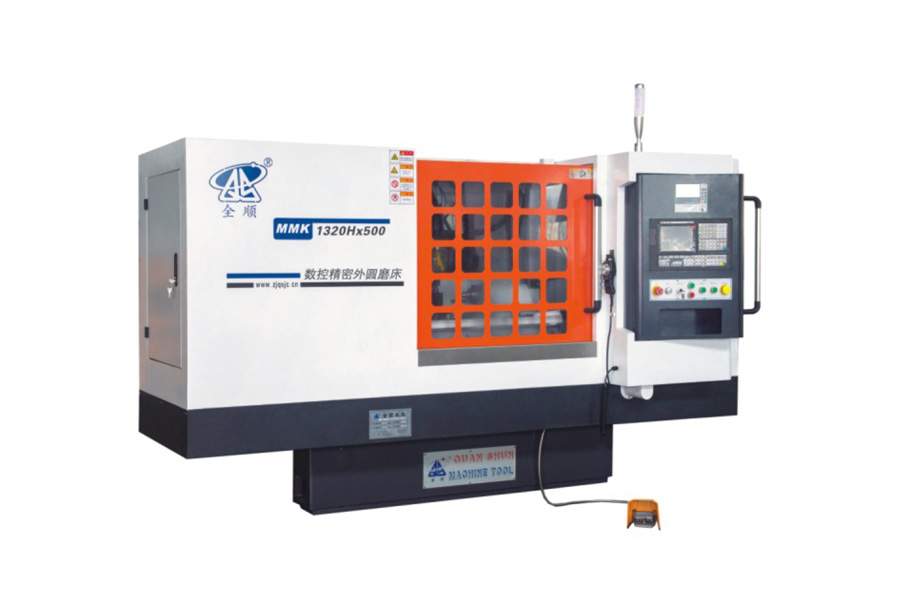
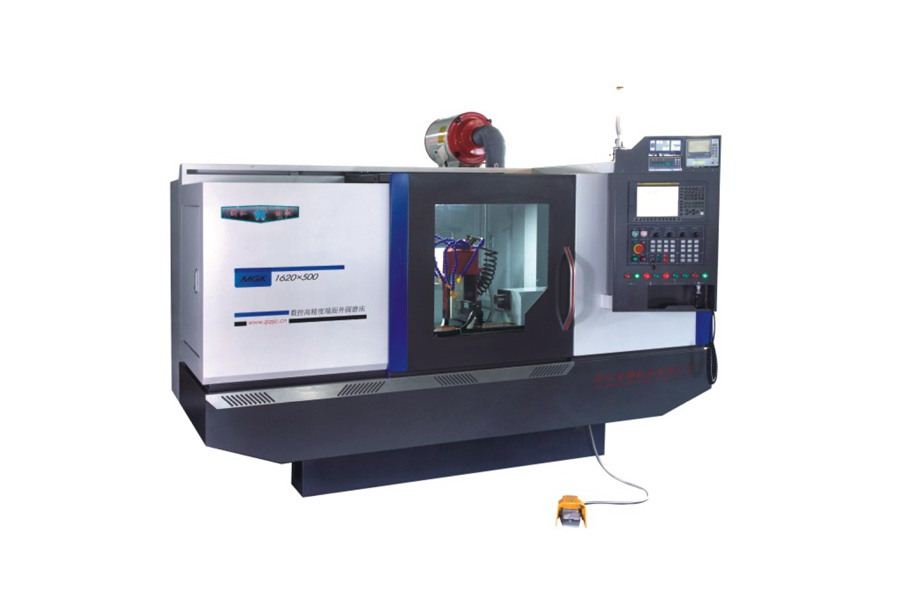
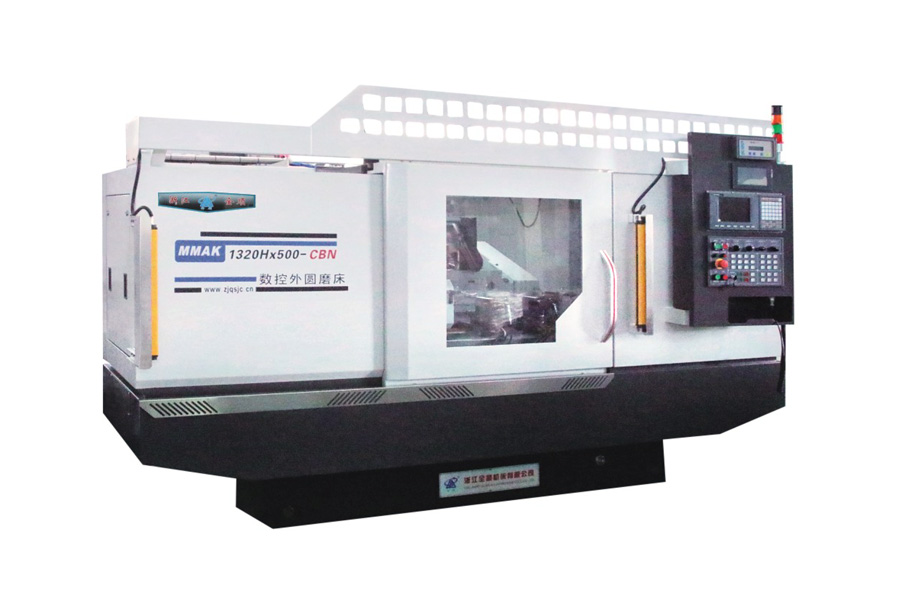
- 8 How CNC Control Has Transformed Grinding Precision
- 9 What Operators Must Check Before Every Grinding Run
Direct Answer
A grinding machine works by rotating an abrasive wheel at high speed against a workpiece to remove material through abrasion, shaping the surface to precise dimensional tolerances. The wheel's abrasive grains act as thousands of micro cutting edges, each shaving off tiny chips of material with every pass.
Core Mechanism
The Physics Behind Material Removal
At its foundation, a grinding machine converts rotational energy into abrasive cutting action. The grinding wheel spins at surface speeds typically between 20 and 45 m/s, pressing against the workpiece with controlled force. Each abrasive grain — usually aluminum oxide, silicon carbide, or cubic boron nitride (CBN) — acts as a single-point cutting tool operating at microscopic scale.
When a grain contacts the workpiece, three things happen in sequence:
- Elastic deformation — the grain compresses the surface before cutting begins
- Plastic plowing — material is pushed sideways, forming ridges
- Chip formation — the grain shears a micro-chip free from the base material
This process repeats millions of times per minute across the entire wheel face, producing the characteristic smooth finish grinding is known for. Surface roughness values of Ra 0.1 to 1.6 micrometers are routinely achieved — finer than any turning or milling operation.
45 m/s
Typical max wheel surface speed
Ra 0.1 μm
Achievable surface roughness
0.001 mm
Dimensional tolerance range
Anatomy
Key Components and What They Do
Grinding Wheel
The cutting tool. Composed of abrasive grains bonded together (vitrified, resinoid, or rubber bonds). Wheel grade (hardness) and structure (grain spacing) are selected based on material and finish requirements.
Wheel Head / Spindle
Houses the spindle motor and bearings that rotate the wheel. Spindle rigidity is critical — even 0.001 mm of runout causes chatter marks on the finished surface.
Worktable
Holds and traverses the workpiece. On surface grinders, the table reciprocates (back-and-forth) or rotates. On cylindrical grinders, the table traverses along the Z-axis while the workpiece rotates.
Dresser
A diamond-tipped tool that periodically resharpens the grinding wheel by breaking off dulled grains and restoring the wheel's geometry. Without dressing, grinding efficiency drops sharply and surface quality degrades.
Coolant System
Delivers cutting fluid (water-soluble oil or synthetic coolant) at flow rates of 20 to 100 L/min to the grinding zone. Coolant reduces heat (temperatures in the grinding zone can exceed 1000 degC locally), flushes swarf, and lubricates the cut.
Feed Mechanism
Controls how deep the wheel engages the workpiece (infeed / depth of cut). Precision feed mechanisms resolve to 0.001 mm increments, enabling the micro-material-removal that distinguishes grinding from rougher cutting processes.
Machine Types
Major Types and Their Working Principles
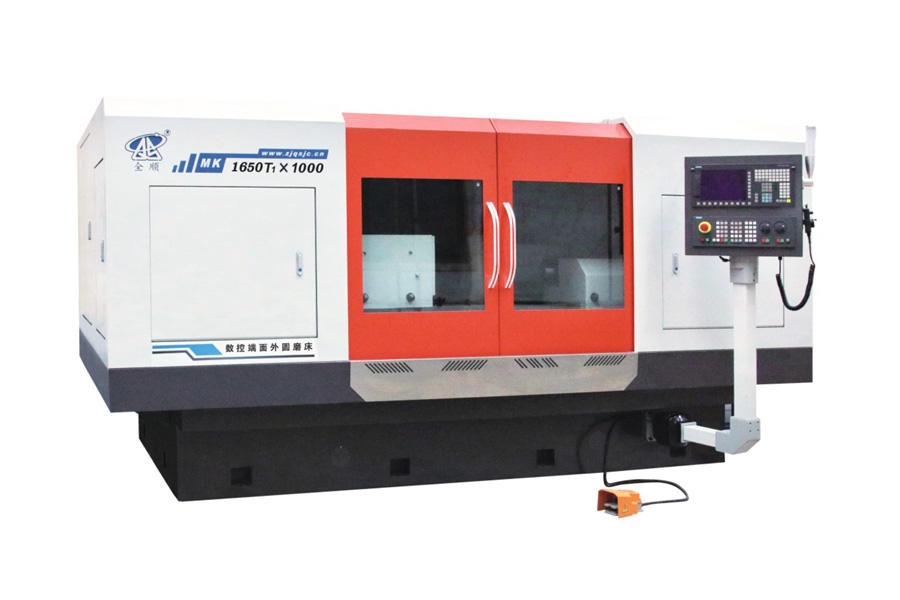
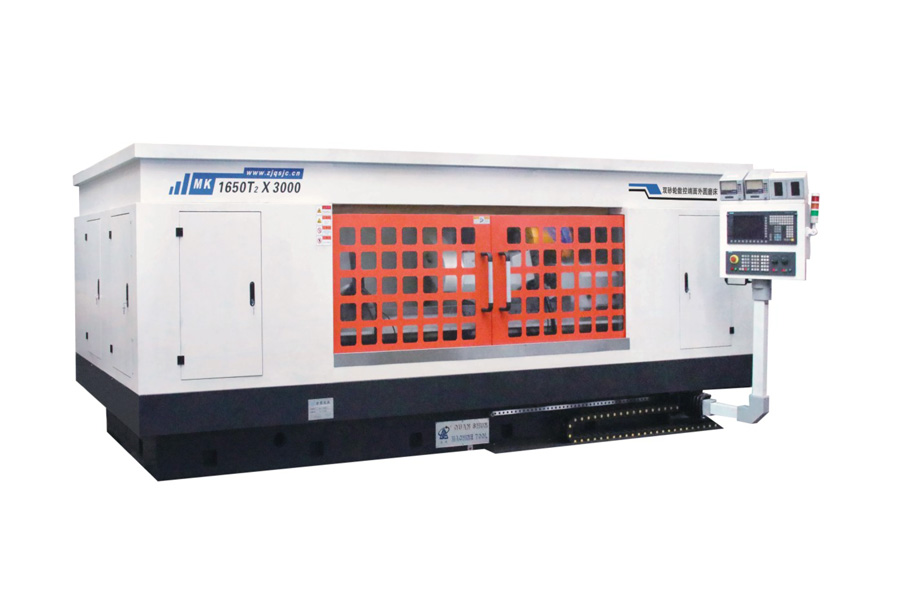
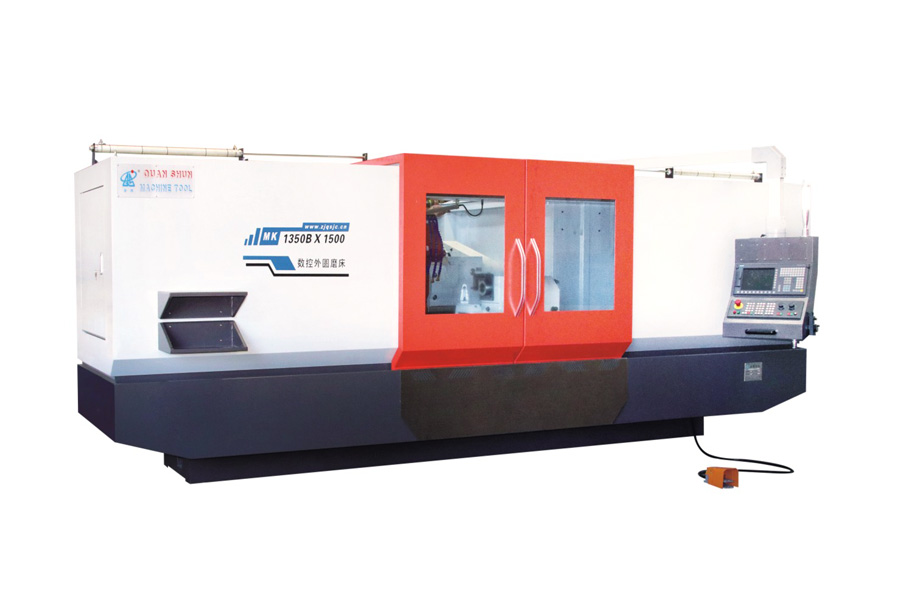
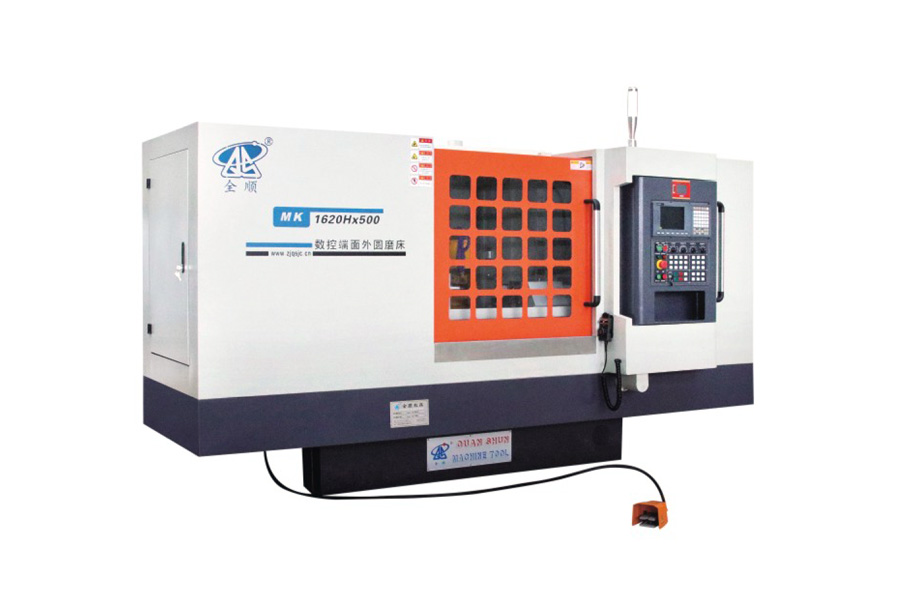
Different geometries require fundamentally different machine configurations. Below are the four most common types used in industrial production:
| Machine Type | Workpiece Motion | Wheel Motion | Typical Tolerance | Common Application |
| Surface Grinder | Reciprocating or rotary table | Rotates, downfeed per pass | +/- 0.005 mm | Flat plates, molds, tooling |
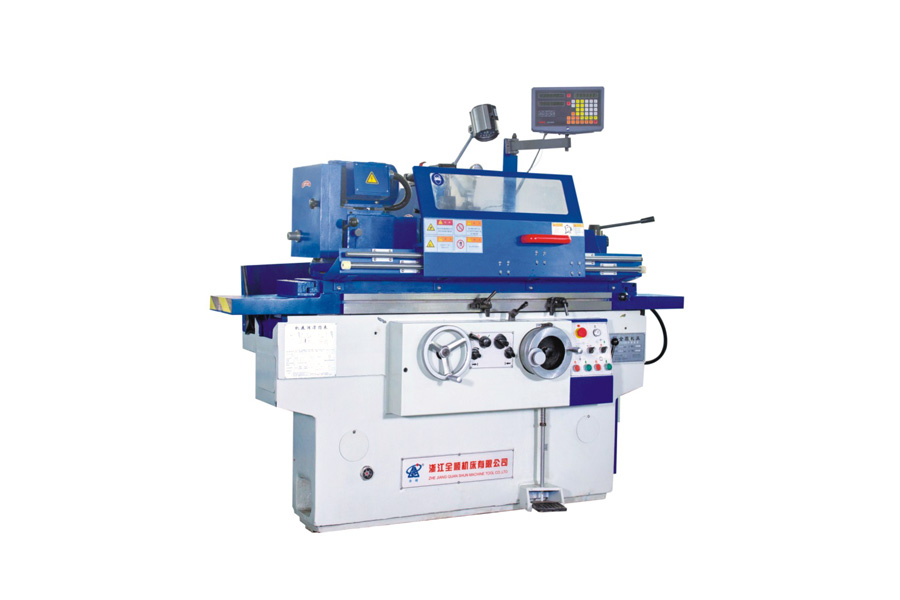
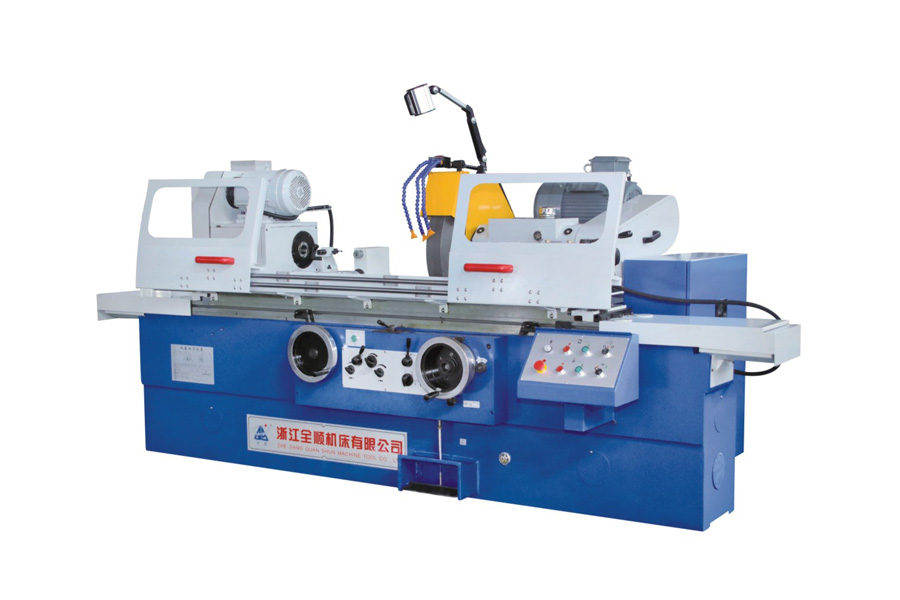
| Cylindrical Grinder | Rotates between centers | Rotates, traverses axially | +/- 0.002 mm | Shafts, pins, rolls |
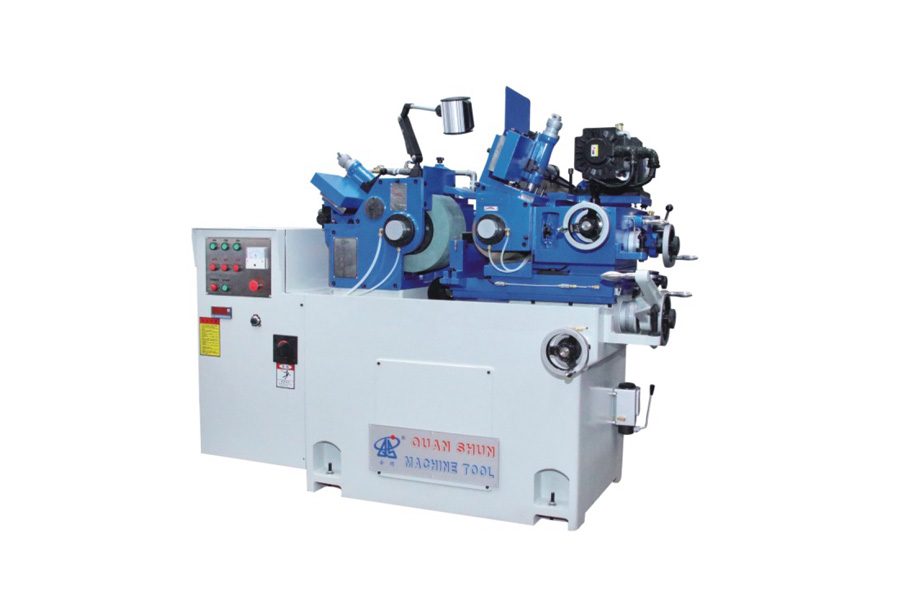
| Centerless Grinder | Fed through by regulating wheel | Grinding wheel + regulating wheel | +/- 0.001 mm | Bars, tubes, high-volume parts |
| Internal Grinder | Rotates (or is held stationary) | Small wheel rotates inside bore | +/- 0.003 mm | Bearing races, hydraulic cylinders |
Deep Dive
How Centerless Grinding Achieves Exceptional Throughput
Centerless grinding is the most productive form of cylindrical grinding because it eliminates part fixturing entirely. The workpiece rests on a blade between two wheels:
- Grinding wheel (large, high-speed) does the actual cutting at speeds up to 60 m/s
- Regulating wheel (smaller, tilted 1 to 6 degrees) controls part rotation speed and axial feed rate
By tilting the regulating wheel, the part is simultaneously rotated and pushed through the machine axially — a method called "through-feed" grinding. A production centerless grinder can process more than 1,000 small cylindrical parts per hour with no operator loading/unloading between parts.
This makes centerless grinding the standard process for high-volume components like automotive valve stems (tolerances of +/- 0.003 mm on 6 mm diameter) and bearing rollers.
Process Control
Critical Parameters That Govern Grinding Performance
Grinding outcomes are determined by four interacting process variables. Mistuning any one of them causes either poor surface finish, dimensional error, or thermal damage (burn).
Wheel Speed (Vs)
Higher wheel speed means each grain removes a thinner chip, reducing cutting forces and improving finish — but increases heat generation. CBN wheels operate at 80 to 120 m/s in high-speed grinding (HSG) for this reason.
Workpiece Speed (Vw)
Faster workpiece movement increases material removal rate (MRR) but raises chip load. The speed ratio Vs/Vw typically ranges from 60:1 to 120:1 in precision grinding applications.
Depth of Cut (ae)
Roughing passes may use ae = 0.05 mm; finishing passes use 0.002 to 0.005 mm. Spark-out passes (zero infeed) at the end of a cycle allow the machine's deflection to spring back, improving dimensional accuracy.
Specific Material Removal Rate (Q'w)
Expressed in mm3/mm/s, this is the governing productivity metric. Modern CNC grinders optimize Q'w in real time using power monitoring to stay near the burn threshold without crossing it.
Common Challenge
Thermal Damage: The Risk Every Grinding Operation Must Manage
Grinding generates intense localized heat — up to 1,500 degC at the grain-workpiece contact zone in extreme cases — lasting only microseconds per grain contact. If heat cannot dissipate fast enough, it causes:
- Grinding burn — oxidation of the surface, visible as blue/brown discoloration, indicating microstructural changes
- Residual tensile stress — which dramatically reduces fatigue life of hardened steel components
- Surface re-hardening or softening — altering the hardness profile the heat treatment was designed to achieve
Preventing thermal damage requires a combination of aggressive coolant application (high-pressure nozzles at 50 to 80 bar in some aerospace applications), proper wheel selection (open structure for free cutting), and conservative material removal rates in finish passes.
Barkhausen noise analysis and X-ray diffraction are used in quality-critical industries (bearings, aerospace) to non-destructively verify that ground surfaces are free from residual tensile stress after machining.
Selection Guide
Choosing the Right Abrasive for the Material
Wheel selection is the single biggest lever on both productivity and surface quality. The wrong abrasive does not just underperform — it can burn or crack the workpiece.
| Abrasive Type | Best For | Avoid On | Relative Cost |
| Aluminum Oxide (Al2O3) | Steel, high-speed steel, ferrous metals | Carbide, ceramics | Low |
| Silicon Carbide (SiC) | Cast iron, non-ferrous, ceramics, stone | Hardened steel (reacts chemically) | Low-Medium |
| Cubic Boron Nitride (CBN) | Hardened steel (above 45 HRC), superalloys | Soft steel, aluminum | High |
| Diamond | Carbide, ceramics, glass, composites | Steel (carbon diffusion causes rapid wear) | Very High |
Modern Technology
How CNC Control Has Transformed Grinding Precision
Modern CNC grinding machines integrate closed-loop feedback that conventional machines cannot match. Key technologies include:
- In-process gauging — air or contact probes measure the workpiece diameter while grinding is active, adjusting infeed automatically to hit target dimensions within 0.001 mm
- Acoustic emission sensors — detect the high-frequency signal when the wheel first contacts the workpiece or dresser, eliminating air-grinding time and detecting wheel breakage
- Adaptive feedrate control — spindle power monitoring feeds data back to the CNC to maintain constant material removal rate as the wheel wears
- Automatic wheel balancing — dynamic balancers inside the wheel flange correct imbalance in real time, reducing vibration below 1 g at operating speed
A modern CNC cylindrical grinder can complete a shaft grinding cycle in under 90 seconds with Cpk values above 1.67 — process capability that batch-mode manual grinding cannot approach.
Practical Guidance
What Operators Must Check Before Every Grinding Run
Even the best machine produces scrap if pre-operation checks are skipped. The following checklist covers the highest-impact items:
- Perform a ring test on the grinding wheel — a clear metallic tone indicates no cracks; a dull thud means the wheel must be discarded
- Verify wheel RPM rating exceeds the spindle's maximum speed by a safety margin of at least 25%
- Check coolant concentration and flow rate before starting — degraded coolant causes burn even at conservative parameters
- Dress the wheel at the start of each new job or after more than 30 minutes of idle time to restore cutting sharpness
- Confirm workpiece fixturing rigidity — a workpiece that vibrates causes chatter marks at frequencies of 500 to 2,000 Hz, ruining surface finish
- Inspect spark guard and wheel guard — grinding sparks can travel 3 to 5 meters, and wheel fragments at operating speed are lethal projectiles