0086-15068518279 (Chinese)/001-5416026691 (English)



 EN
EN
 中文简体
中文简体Content
- 1 What a Dressing Wheel Does to the Grinding Face
- 2 Dressing Wheel Types and Where Each One Fits
- 3 Truing and Dressing Are Not the Same Job
- 4 Dressing Parameters That Actually Move the Result
- 5 Matching Dressing Practice to the Machine Type
- 6 Symptoms That Point Back to the Dressing Wheel
- 7 What to Check Before You Order a Dressing Setup
A cylindrical grinder finishes a batch of hardened steel shafts and the last five parts measure 0.009 mm out of round while the first fifty held 0.003 mm. Nothing changed in the program, the coolant or the fixture. The variable is the abrasive face, and the tool that puts it back into condition is the dressing wheel.
Short version first: on most shop floors "dressing wheel" means either the diamond tool that cuts the abrasive wheel back to shape, or the abrasive wheel on the machine that has to be reconditioned before it can cut accurately again. The dressing step, not the wheel specification alone, decides whether a grinding process holds tolerance from the first part of a shift to the last. What follows is how dressing tools differ, which settings actually move the result, and what the marks on a finished part say about the wheel face.
What a Dressing Wheel Does to the Grinding Face
Dressing is a cutting operation performed on the abrasive face. The dresser removes a thin layer of grain and bond so the wheel returns to a defined shape with fresh abrasive exposed. Two goals sit inside that single action:
- Geometry: removing the out-of-round, taper or profile error that built up during the shift
- Cutting behavior: opening the bond and clearing loaded metal so the face cuts instead of rubs
A wheel can pass one test and fail the other. A face that is geometrically true but glazed grinds hot, pulls spindle power and burns the workpiece; a face that is sharp but not round scatters part size, because the effective depth of cut changes with every revolution. Many problems reported as machine drift or material variation trace back to the wheel face.
The numbers involved are small but decisive. Rough truing of a mounted vitrified wheel usually removes 0.02 to 0.05 mm per pass; finish dressing removes 0.005 to 0.01 mm per pass and is followed by two to four spark-out passes with no further infeed. Too much dressing wastes wheel and diamond; too little leaves the face loaded and the part burnt. On hardened steel above 55 HRC the safe window between those two failures is narrow.
Dressing Wheel Types and Where Each One Fits
The tool you mount decides what the face looks like afterwards, so it is worth choosing by task rather than by price per piece.
| Dressing tool | Typical form | Best suited to | Failure to watch |
|---|---|---|---|
| Single-point diamond | One diamond set in a steel shank | General truing and dressing on cylindrical, centerless and surface machines | The point wears flat and starts rubbing |
| Multi-point or cluster diamond | Several small diamonds in a matrix | Heavier truing cuts where wheel life matters more than surface pattern | Rougher face pattern, harder to hold tight roundness |
| Blade or chisel dresser | Elongated diamond layer brazed to a strip | Profile and form dressing on form grinding wheels | Loading the wrong side breaks the diamond layer |
| Rotary diamond dresser | Diamond grit in a driven metal or resin roll | High-volume CNC lines, form rolls, CBN wheels | Wrong speed ratio between roll and wheel |
| Abrasive dressing wheel | Silicon carbide or aluminum oxide stick or wheel | Dressing diamond and CBN wheels, light hand work | Wears fast, cannot hold geometry |
A single-point diamond remains the default for general cylindrical work because it is predictable and easy to reset. Rotary dressers dominate high-volume CNC lines where dressing time is part of the cycle. Abrasive dressing wheels are a different animal: they dress diamond and CBN wheels, and because they wear quickly they are not geometry tools.
Truing and Dressing Are Not the Same Job
Operators often use the two words interchangeably, and that habit is where setups go wrong.
Truing restores geometry
Truing removes eccentricity so that every point of the face sits at the same radius. It is measured as total indicated runout, and on precision work the target is normally below 0.005 mm. A freshly mounted wheel can sit 0.1 to 0.3 mm out of round, so truing after mounting is not optional. When a ground diameter tapers along the length of a part, geometry is usually the first suspect.
Dressing restores cutting behavior
Dressing is the routine that repeats every few parts or every cycle, and it only needs to touch the face lightly. Continuous dressing during grinding and interval dressing between parts are both valid strategies; the choice comes down to how quickly the wheel loads versus how much cycle time the process can absorb.
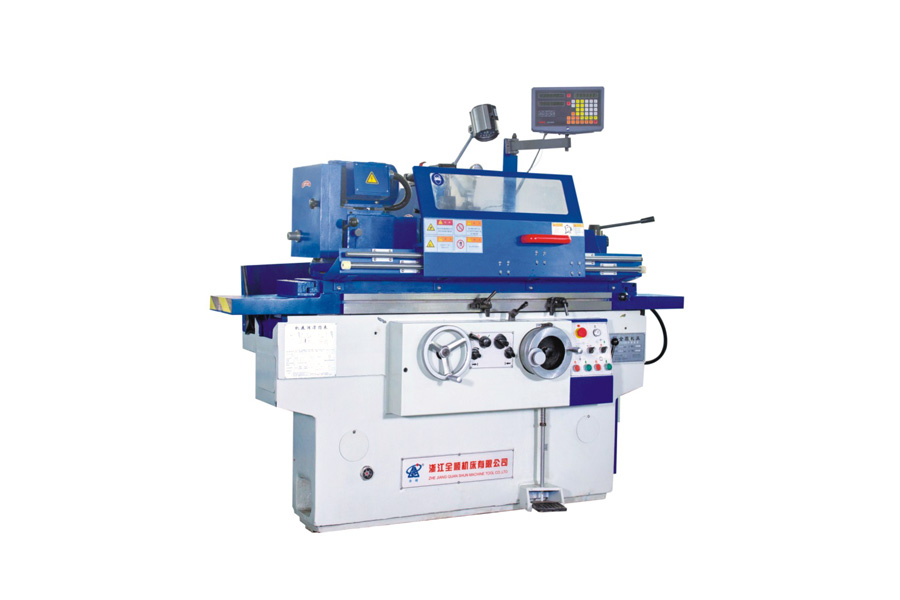
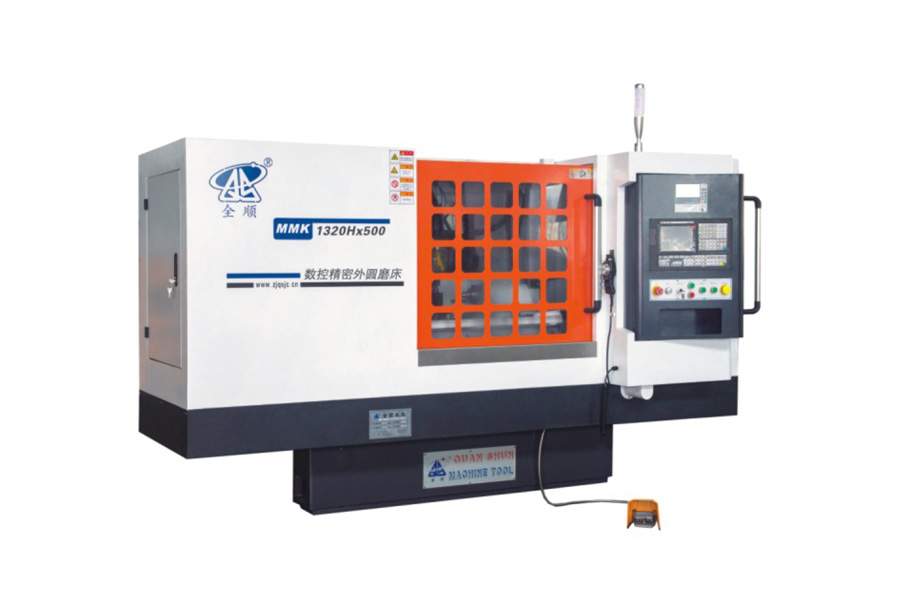
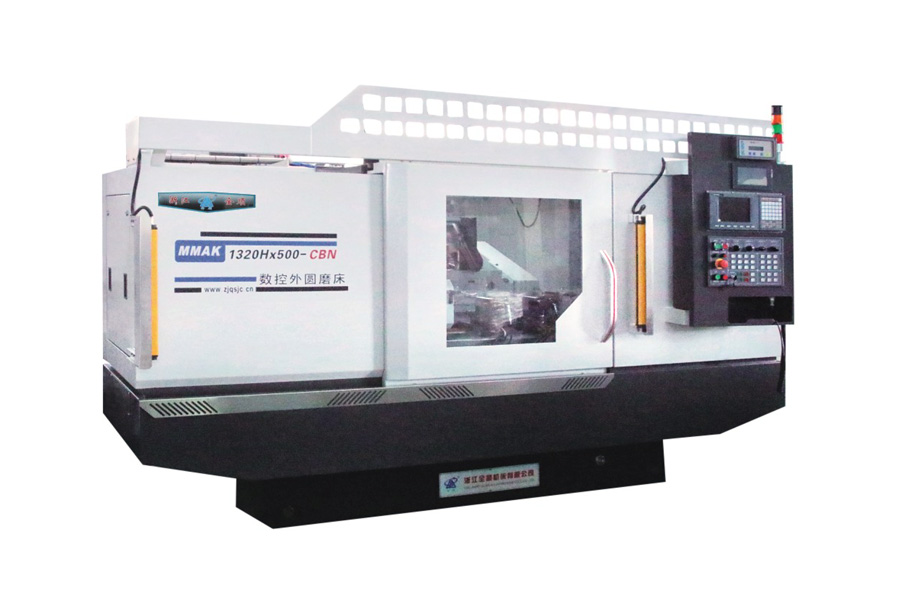
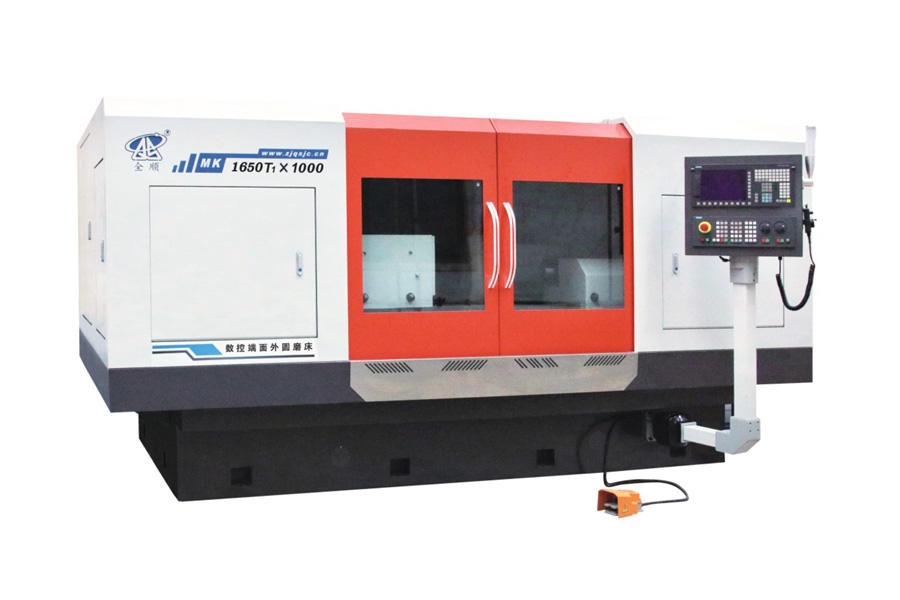
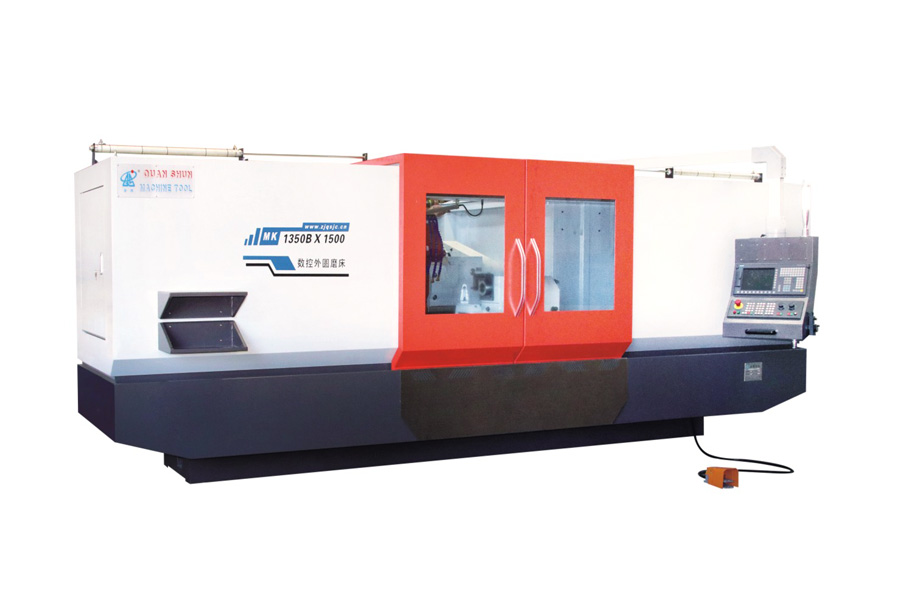
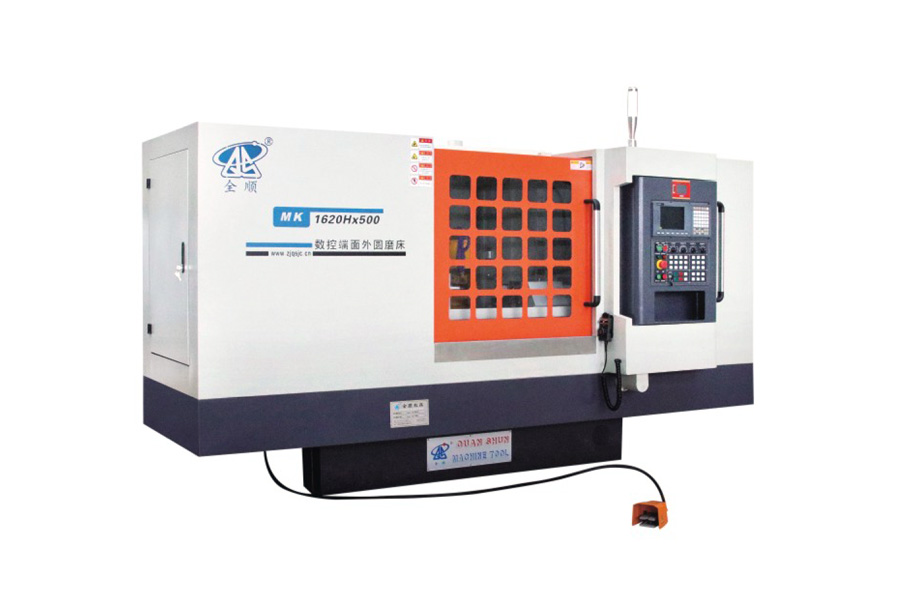
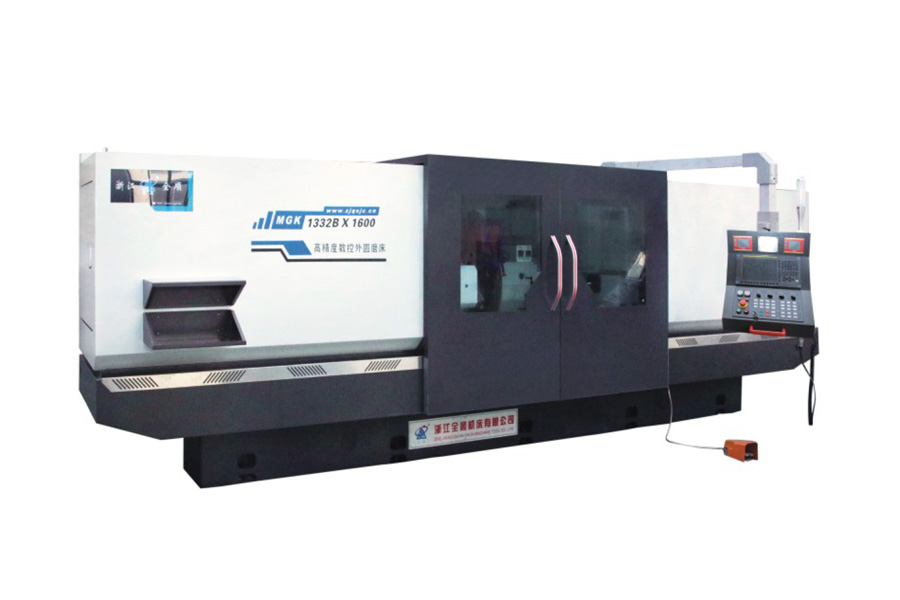
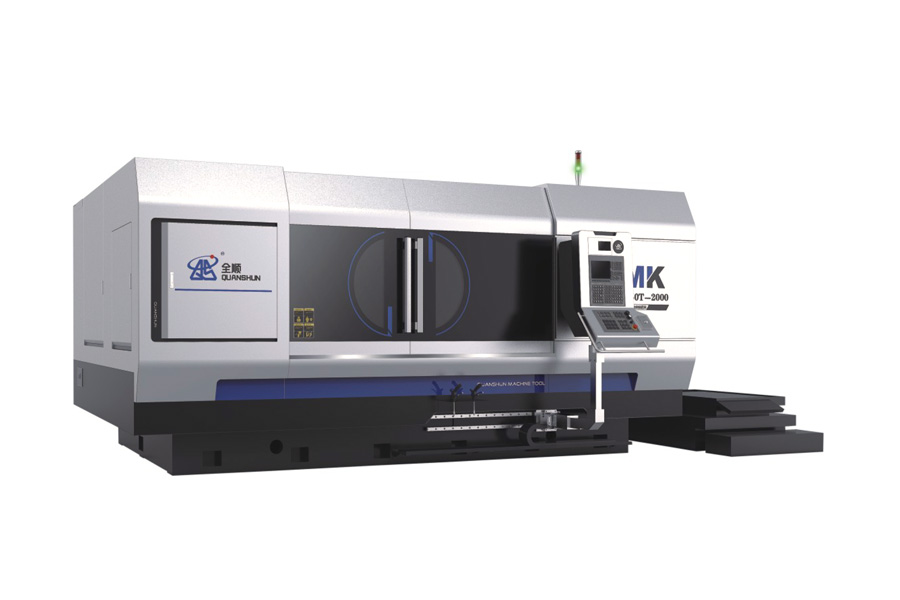
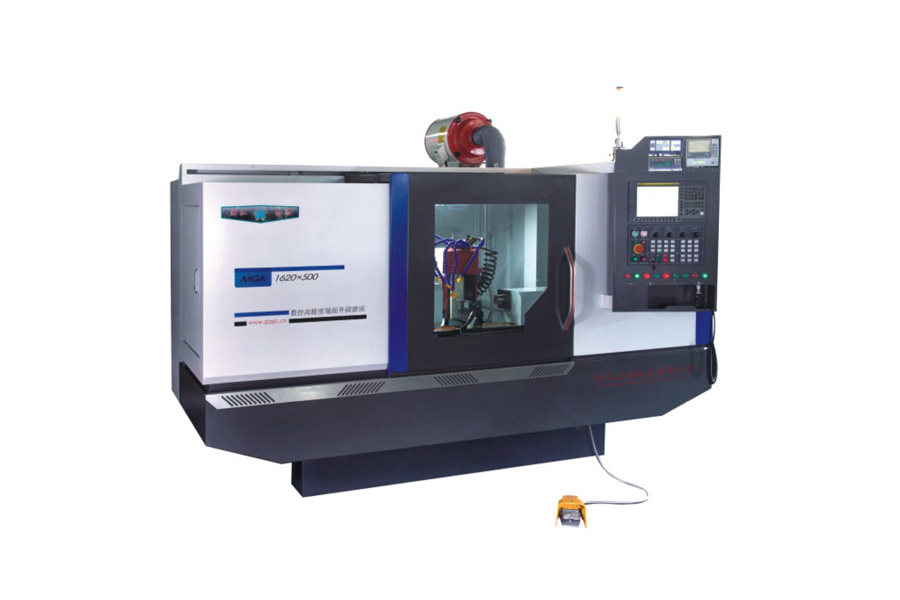 High Precision CNC Cylindrical Grinding MachineA CNC cylindrical grinder for precise shaft grinding, with rigid construction and programmable control to help manage dressing routines and fine settings.View Product →
Dressing Parameters That Actually Move the Result
Once the tool is right, a handful of settings decide whether the face behaves. Start from these values and change one at a time.
| Parameter | Common starting value | What it changes |
|---|---|---|
| Depth of cut per pass | 0.005 to 0.01 mm finishing, 0.02 to 0.05 mm truing | Face sharpness and diamond wear; deep cuts leave facets |
| Traverse rate | 0.1 to 0.3 of wheel width per wheel revolution | Helix pattern left on the face; faster traverse, coarser helix |
| Wheel speed while dressing | 50 to 70 percent of grinding speed | Impact load on the diamond and heat at the contact |
| Spark-out passes | 2 to 4 passes with no infeed | Removes residual helix and equalizes the face |
| Coolant | Flood, filtered, aimed at the contact | Flushing swarf so the bond does not reload |
On CNC machines these values live inside the dressing cycle, together with wheel-wear compensation. That compensation is what keeps the wheel-to-work contact point stable after each dress; skip it and the machine will grind to size only until the wheel shrinks past the stored offset. A step-by-step look at the cycle is available in this guide to dressing the grinding wheel on a CNC cylindrical grinder.
Speed deserves separate attention. Dressing runs at reduced wheel speed because contact at full production speed raises impact load on the diamond and shortens its life. A machine built for high-speed production therefore needs a dressing routine that is written for lower speeds from the start, rather than one copied from a standard machine.
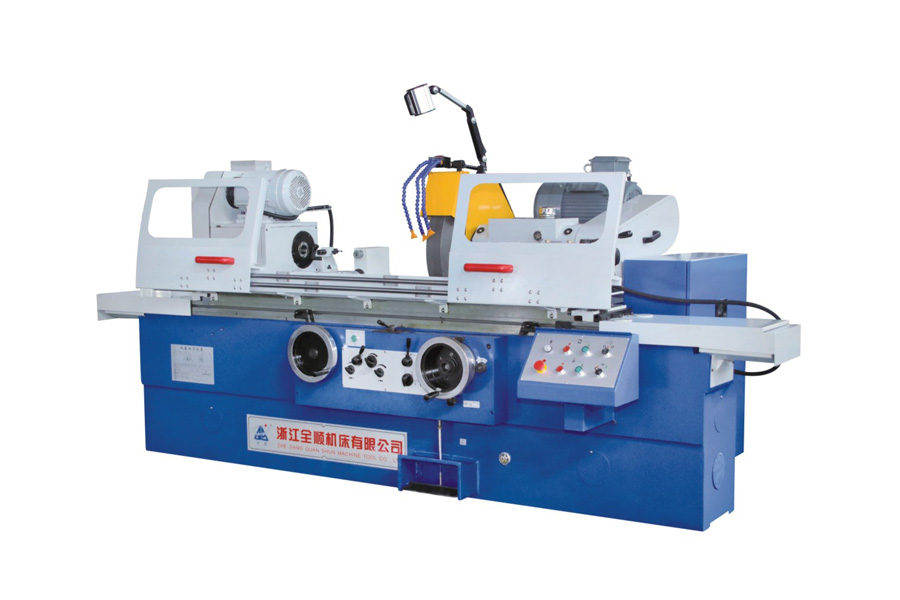
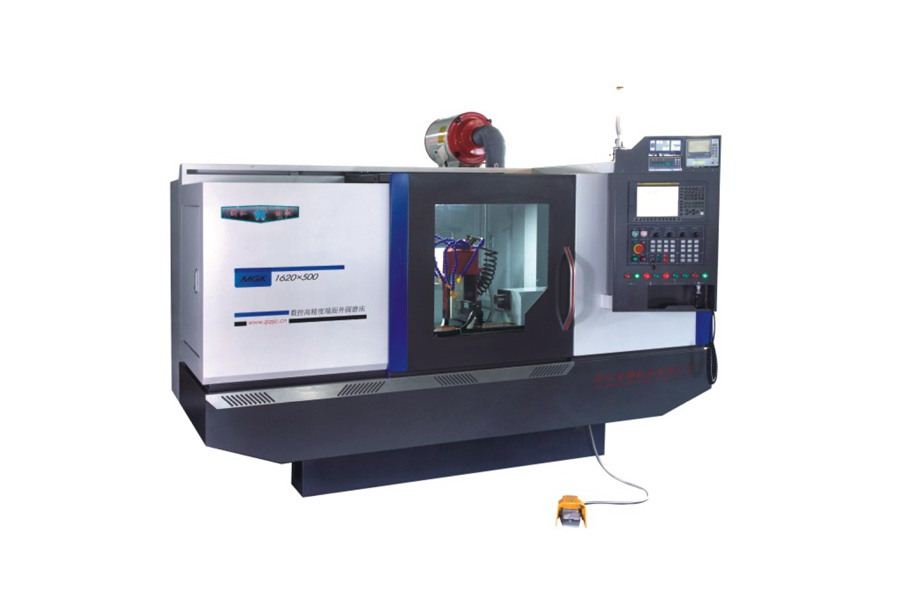
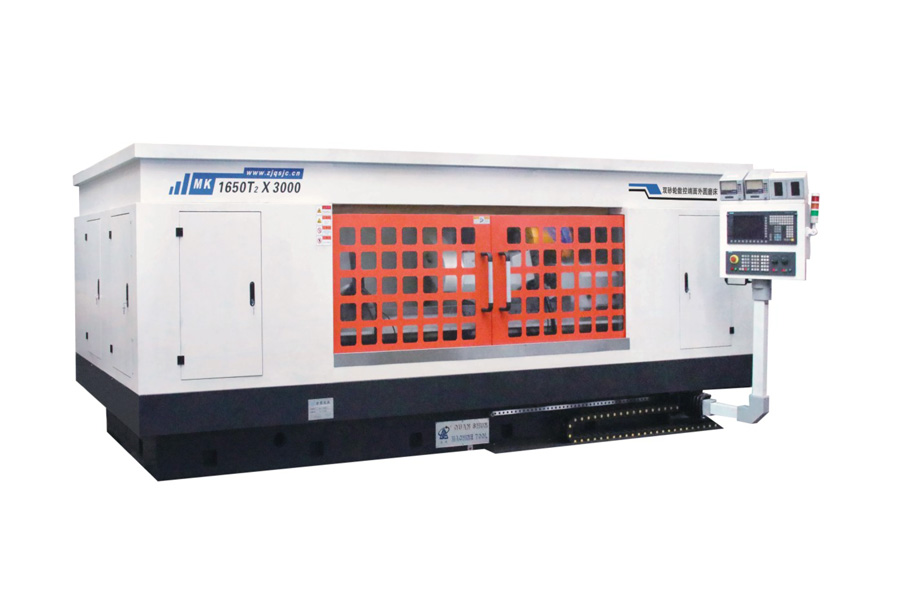
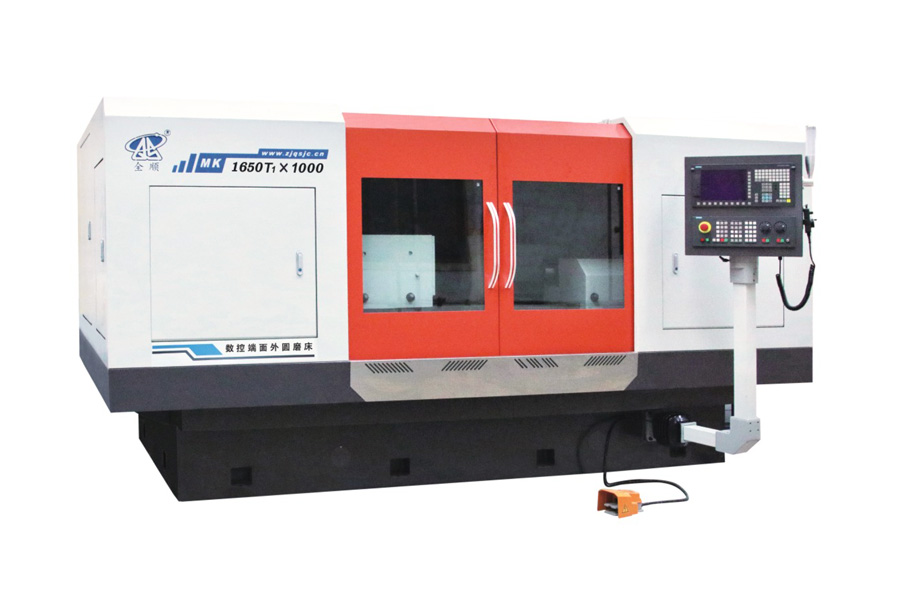
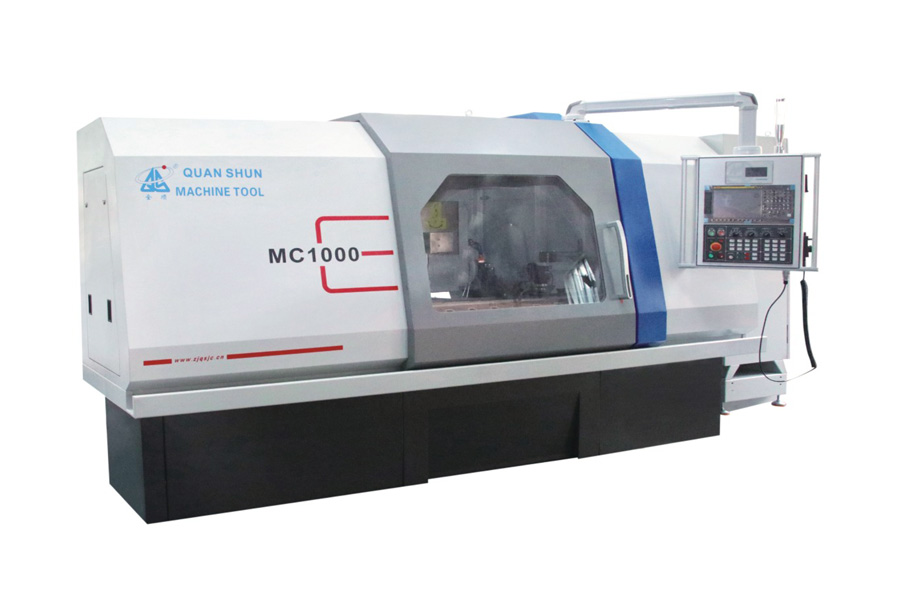
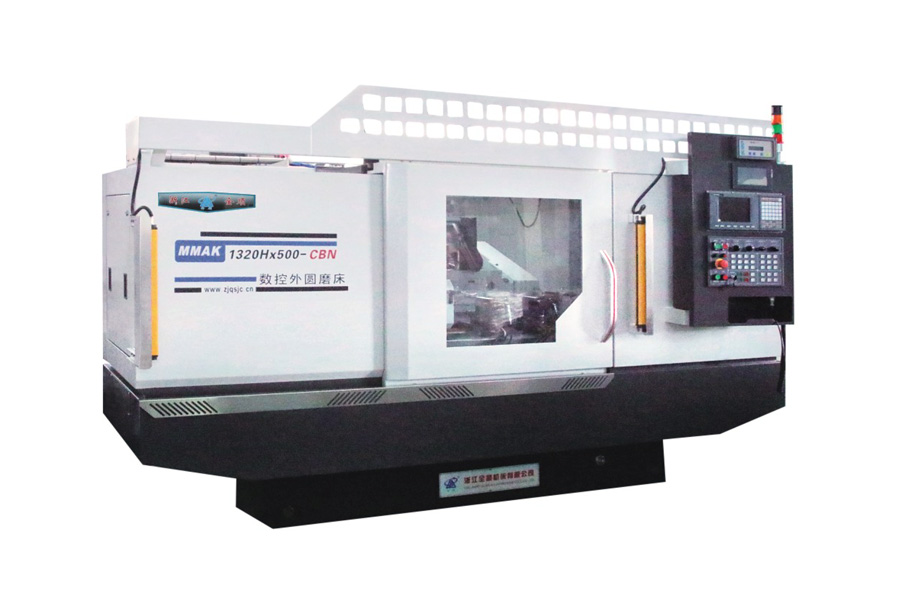 High-Speed CNC Cylindrical Grinding MachineBuilt for faster cylindrical grinding cycles, this high-speed CNC machine pairs rigid construction with programmable control, making wheel-speed and dressing routines worth reviewing for production work.View Product →
Matching Dressing Practice to the Machine Type
The same dresser behaves differently depending on the machine it is mounted on, because the dressing cycle is tied to the machine structure and control.
Cylindrical and universal grinders
Most machines in this class carry a table-mounted or tailstock-mounted diamond holder with a manually set infeed, or a servo-driven dresser on the CNC version. On a CNC cylindrical grinder the dresser position is stored in the program, so changing wheels means re-teaching the dresser touch-off point. Get that point wrong by 0.02 mm and every compensation value downstream is wrong as well.
High-speed machines
Higher wheel speed shortens cycle time but makes the dressing contact hotter. Reducing infeed and adding one or two extra spark-out passes usually beats increasing dressing depth to compensate.
Centerless grinders
Here the regulating wheel sets the work feed rate, and dressing it with a single-point tool at a fixed angle creates that feed. The height of the dresser relative to the regulating wheel centerline controls the resulting angle, so it has to be set deliberately on each machine rather than copied from another unit.
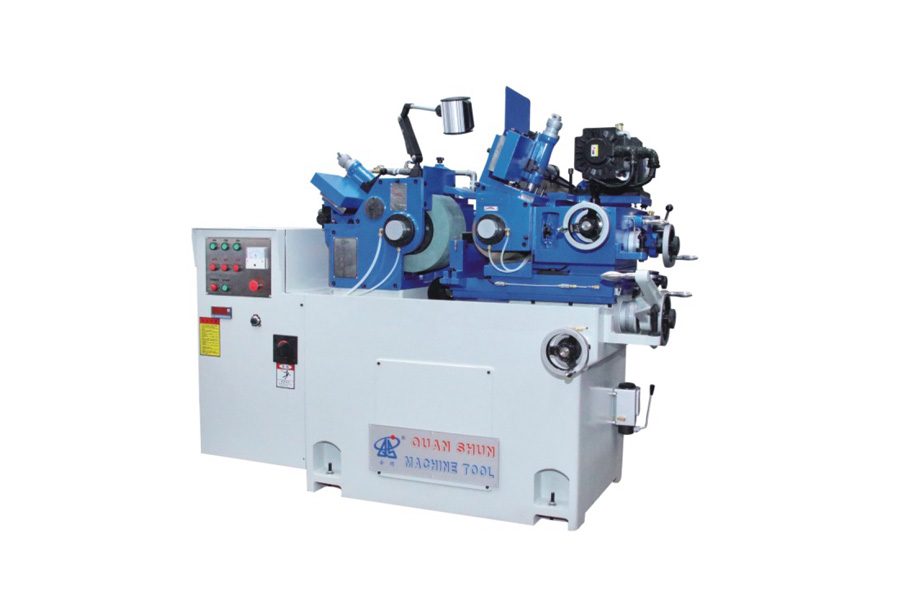
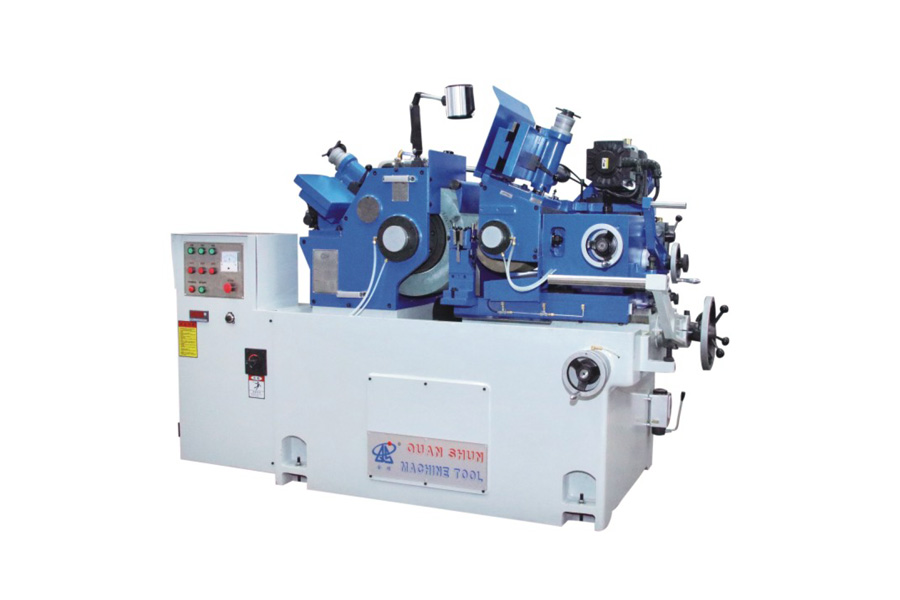 Centerless Grinding Machine for High-Volume Cylindrical PartsA centerless grinder using grinding and regulating wheels to support cylindrical parts without centers, suited for continuous production where regulating-wheel dressing and setup affect part quality.View Product →
Symptoms That Point Back to the Dressing Wheel
Most dressing faults show up on the part before they show up on the wheel.
- Burning or a blue tint on the surface: the face is glazed or loaded, so dress deeper and check coolant delivery.
- Size drift through a batch: wheel wear is not being compensated, or the face breaks down faster than the dress interval assumes.
- Taper along the part: a geometry problem, so true the wheel and confirm table alignment.
- Chatter or spiral marks: traverse rate is too high, or the diamond has gone flat and is rubbing rather than cutting.
- Diamond life far below expectation: depth per pass is too aggressive or dressing speed is too high.
What to Check Before You Order a Dressing Setup
A dressing tool is a small purchase that can stop a large machine, so verify these points against the actual spindle and cycle before ordering:
- Tool-holder interface, shank diameter and clamping length against the machine drawing
- Diamond grade and point geometry suited to the abrasive type and wheel hardness
- Whether the control can run a reduced-speed dressing cycle and store dresser offsets
- Spare diamond points or rolls, since replacement lead time usually exceeds the tool's own cost
- A written dressing sheet for each wheel specification used on the machine
Dressing is the smallest routine in a grinding cell and one of the most expensive to get wrong, because every symptom it produces looks like a machine fault. Keep a simple log: tool type, depth per pass, traverse rate, dress interval and the part-size trend that followed. Within two or three weeks the log will show exactly when the face starts to fail, which turns wheel replacement from a guess into a scheduled event and keeps the tolerance band where the drawing says it should be.